Li.fi Bridge vs Teleswap: Ultimate DEX Bridge Comparison 2026


Choosing the right cross-chain bridge can make or break your DeFi strategy. With over $69 billion in volume flowing through Li.fi bridge as of February 2026, and Teleswap emerging as the leading trustless bitcoin bridge, traders face a critical decision: which platform delivers better security, lower costs, and more reliable cross-chain swaps?
Think of cross-chain bridges like international currency exchanges at airports. Some offer many currency pairs but charge high fees and require you to trust them with your money. Others specialize in specific currencies with better rates and security. The li.fi bridge acts like a comprehensive exchange bureau, while Teleswap functions like a specialized, trustless Bitcoin exchange that never holds your funds.
Key Takeaways:Li.fi bridge processed over $69 billion in volume by February 2026, aggregating 12+ underlying bridges across 30+ chains.Teleswap offers trustless Bitcoin bridging using SPV light client verification, eliminating custodial risks that plague wrapped Bitcoin solutions.Li.fi excels at complex multi-chain routing but has variable settlement times, while Teleswap specializes in direct Bitcoin-to-DeFi swaps.For Bitcoin bridging, Teleswap's trust-minimized approach beats Li.fi's aggregated model in security and decentralization.Li.fi serves best as a general-purpose DEX bridge aggregator, while Teleswap dominates Bitcoin-specific cross-chain needs.
Table of Contents
- What is Li.fi Bridge?
- What is Teleswap?
- Core Differences: Aggregator vs Specialized Bridge
- Security Models: Trust vs Trustless
- Cost and Speed Analysis
- Bitcoin Bridging: Why Teleswap Wins
- Integration and Ecosystem
- Head-to-Head Comparison
- Which Bridge Should You Choose?
- Frequently Asked Questions
What is Li.fi Bridge?
Li.fi bridge isn't actually a bridge—it's a routing aggregator that finds the best path across multiple bridges and DEXs. Imagine you want to send money from New York to Tokyo, but instead of using one bank, you have an assistant who checks rates across dozens of banks, currency exchanges, and transfer services to find the cheapest, fastest route.
That's exactly how the li.fi bridge operates. When you want to swap tokens across chains, Li.fi:
- Scans 12+ underlying bridges (Stargate, Across, Hop, CCTP, Connext, Wormhole)
- Checks DEX prices on both source and destination chains
- Calculates the optimal multi-step route
- Executes everything in a single transaction
According to Li.fi's February 2026 update, the platform has processed over $69 billion in lifetime volume, with Arbitrum alone seeing $700 million in volume since the start of 2026.
The platform recently launched Li.fi Composer and Li.fi Deposit tools, expanding beyond simple bridging into full DeFi workflow orchestration. For users seeking complex multi-chain routing with broad token support, the li.fi bridge aggregator model provides unmatched flexibility across 30+ blockchains.
What is Teleswap?
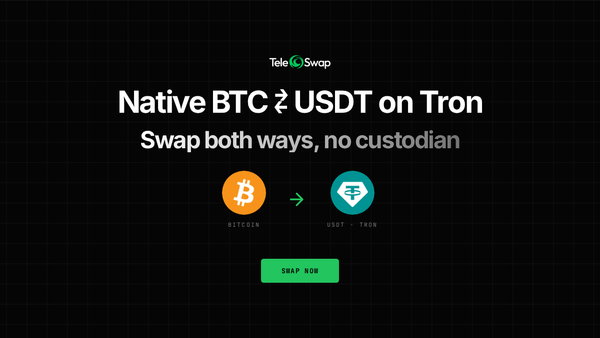
Teleswap takes a fundamentally different approach. Instead of aggregating multiple bridges, it focuses on solving one problem exceptionally well: trustless Bitcoin bridging. Built by TeleportDAO, Teleswap is a non-custodial Bitcoin bridge that enables direct BTC swaps across Ethereum, Base, Polygon, Arbitrum, BSC, Optimism, TON, Unichain, and Solana.
Teleswap is a non-custodial Bitcoin bridge that uses SPV light client verification to prove Bitcoin transactions directly on-chain, meaning your Bitcoin isn't held by third parties. Here's what makes Teleswap unique:
- No custodians: Your Bitcoin isn't held by a third party
- No wrapping: Direct swaps without intermediate wrapped tokens
- No committees: No multi-sig groups that could collude or fail
- Cryptographic verification: Each swap is verified using Bitcoin's own security model
Think of traditional Bitcoin bridges like safety deposit boxes where you give your Bitcoin to a bank (custodian) and get a receipt (wrapped Bitcoin). Teleswap is more like a cryptographic escrow that releases funds automatically when mathematical conditions are met—no human intermediaries required.
Core Differences: Aggregator vs Specialized Bridge
The fundamental difference between Li.fi bridge and Teleswap lies in their architectural philosophy. Li.fi follows the "aggregator model" while Teleswap uses a "specialized trustless model."
Li.fi's Aggregator Approach
Li.fi acts as a meta-layer that routes through existing bridges. When you initiate a swap, Li.fi might swap your ETH to USDC on Ethereum using Uniswap, bridge USDC to Arbitrum using Circle's CCTP, then swap USDC to ARB on Arbitrum using Camelot DEX.
This gives Li.fi incredible flexibility—it can route between any tokens on 30+ chains. However, each step adds complexity, fees, and potential failure points.
Teleswap's Direct Approach
Teleswap eliminates intermediary steps for Bitcoin swaps. Instead of Bitcoin → Wrapped Bitcoin → Bridge → Destination Chain → Target Token, Teleswap enables Bitcoin → Direct Swap → Target Token on Destination Chain.
This direct approach reduces costs, eliminates wrapping risks, and maintains Bitcoin's security properties throughout the entire swap process.
Security Models: Trust vs Trustless
The security difference between these platforms is profound and represents two entirely different philosophies about cross-chain security.
Li.fi's Aggregated Trust Model
Since Li.fi aggregates multiple bridges, your security depends on the weakest link in the chosen route. Each underlying bridge has different security assumptions: Stargate requires liquidity pools and protocol governance, Wormhole uses a guardian network that must sign off on transfers, CCTP relies on Circle's centralized minting/burning, and Connext uses an optimistic model with dispute periods.
According to DeFiLlama's hack database, bridge exploits have resulted in over $2.8 billion in losses since 2021, with most targeting the trust assumptions in these aggregated systems.
Teleswap's Trustless Model
Teleswap eliminates trust assumptions by using cryptographic proofs. Each Bitcoin transaction is proven mathematically valid using Merkle proofs and block headers, with Teleswap running Bitcoin light clients on destination chains that can verify Bitcoin transactions without trusting external parties.
- SPV Light Client: Verifies Bitcoin transactions without trusting external parties
- Cryptographic Proof: Each Bitcoin transaction is proven mathematically valid using Merkle proofs and block headers
- Atomic Execution: Swaps either complete fully or fail completely—no partial executions
- No Custodial Phase: Your Bitcoin never sits in a custodial wallet or pool
This approach inherits Bitcoin's security model directly. If Bitcoin is secure (which it has been for 15+ years), then Teleswap swaps are secure by mathematical certainty, not trust.
Cost and Speed Analysis
Cost and speed vary dramatically between these platforms based on your specific use case. Let's examine real-world performance data.
Li.fi Bridge Performance
Based on March 2026 analysis from Eco, a typical $1,000 USDC transfer from Ethereum to Arbitrum via Li.fi costs $0.94 using the Across protocol with a settlement time of 22 seconds and a 99.2% success rate (industry-leading due to route optimization).
However, Li.fi's costs vary significantly based on route complexity, network congestion, which underlying bridge is selected, and DEX slippage on both ends.
Teleswap Performance
For Bitcoin-specific swaps, Teleswap typically offers Bitcoin transaction fees of $2-15 depending on mempool conditions plus destination chain gas, with no bridge protocol fees. Settlement takes 1-3 Bitcoin confirmations (approximately 10-30 minutes) for final settlement with completely predictable and transparent pricing that doesn't vary based on route selection.
The key advantage: Teleswap's costs are predictable and transparent. You pay Bitcoin network fees plus destination chain gas—no hidden bridge fees, no slippage surprises, no failed transactions due to route complexity.
Bitcoin Bridging: Why Teleswap Wins
For Bitcoin bridging specifically, Teleswap offers significant advantages over Li.fi's aggregated approach. This difference becomes critical when you understand the unique challenges of bridging Bitcoin—the world's most secure and decentralized cryptocurrency.
The Wrapped Bitcoin Problem
When you use Li.fi bridge for Bitcoin swaps, you're typically interacting with wrapped Bitcoin tokens like WBTC, which introduces several risks: custodial risk (WBTC requires BitGo to custody the underlying Bitcoin), censorship risk (custodians can freeze or blacklist addresses), counterparty risk (the custodian could fail, get hacked, or act maliciously), and regulatory risk (custodians must comply with evolving regulations).
As of March 2026, over $8.4 billion in Bitcoin sits in custodial bridges according to DeFiPulse data—representing a massive honeypot for attackers and regulators.
Teleswap's Trustless Alternative
Teleswap eliminates custodial risks by using direct Bitcoin verification without wrapping or custodians. Unlike wrapped Bitcoin solutions that require trusting third parties, Teleswap's trustless bitcoin bridge approach offers no custodians holding your Bitcoin, direct cryptographic verification of Bitcoin transactions on-chain, maintained Bitcoin properties of censorship resistance and decentralization, and regulatory independence with no centralized entity to pressure or shut down.
This makes Teleswap the clear winner for users who value Bitcoin's core properties: trustlessness, decentralization, and censorship resistance.
TeleBTC: A Better Wrapped Bitcoin
When Teleswap does create wrapped Bitcoin (TeleBTC), it uses the same trustless model. Unlike WBTC, TeleBTC is backed by real Bitcoin locked in provable smart contracts, redeemable without requiring permission from custodians, secured by cryptographic proofs rather than corporate promises, and auditable in real-time using Bitcoin's blockchain.
Integration and Ecosystem
Both platforms have built impressive integration ecosystems, but with different focuses and approaches.
Li.fi's B2B Integration Strategy
Li.fi has positioned itself as infrastructure for other applications. According to their February 2026 update, Li.fi integrates with major wallets like Phantom and MetaMask, DeFi protocols including lending platforms and yield farms, and provides developer tools through SDK and API for custom integrations. The platform also offers Jumper Exchange as its own consumer interface.
Li.fi's strength lies in being the "plumbing" that other applications use for cross-chain functionality. Developers integrate Li.fi's SDK to add cross-chain swaps without building their own bridge infrastructure.
Teleswap's Strategic Integrations
Teleswap focuses on high-impact integrations that maximize Bitcoin bridging adoption through aggregator partnerships like Rubic and Rango Exchange, wallet integrations including MetaMask and Trust Wallet, direct app access at app.teleswap.xyz for power users, and active cross-chain DEX presence on Ethereum, Base, Polygon, Arbitrum, BSC, Optimism, TON, Unichain, and Solana.
Teleswap's integration strategy emphasizes quality over quantity—focusing on partnerships that directly serve Bitcoin holders who want to participate in DeFi.
Head-to-Head Comparison
| Feature | Li.fi Bridge | Teleswap |
|---|---|---|
| Architecture | Bridge aggregator (routes through others) | Native trustless bridge |
| Chain Coverage | 30+ chains | 9 chains (BTC-focused) |
| Token Support | All EVM tokens + select others | Bitcoin + major tokens on supported chains |
| Security Model | Varies by route (aggregated trust) | Trustless (SPV light client proofs) |
| Settlement Time | 22 seconds - 30 minutes | 10-30 minutes (Bitcoin confirmation time) |
| Fees | $0.94+ (varies by route complexity) | Bitcoin network fee + destination gas |
| Bitcoin Handling | Uses wrapped Bitcoin (WBTC, etc.) | Direct Bitcoin bridging (no wrapping) |
| Custodial Risk | Depends on underlying bridge | Non-custodial |
| Volume (Feb 2026) | $69 billion lifetime | Growing (exact figures proprietary) |
| Best Use Case | Complex multi-chain routing | Bitcoin-to-DeFi bridging |
Which Bridge Should You Choose?
The choice between Li.fi bridge and Teleswap depends entirely on your specific needs and priorities. Here's a practical decision framework:
Choose Li.fi Bridge If:
- You need maximum chain coverage: Li.fi's 30+ chains beat Teleswap's 9 chains
- You're swapping non-Bitcoin assets: Li.fi excels at EVM token routing
- You want the cheapest route: Li.fi's aggregation finds the lowest-cost path
- You're building an application: Li.fi's SDK and developer tools are more mature
- Speed is critical: Li.fi can execute some routes in under 30 seconds
Choose Teleswap If:
- You're bridging Bitcoin: Teleswap's trustless approach is superior to wrapped Bitcoin
- Security is paramount: Trustless verification beats aggregated trust models
- You value decentralization: No custodians, committees, or centralized components
- You want predictable costs: Transparent fee structure with no hidden complexity
- You're a Bitcoin maximalist: Maintains Bitcoin's core properties throughout bridging
The Hybrid Approach
Many sophisticated DeFi users adopt a hybrid strategy: use Teleswap for Bitcoin bridging and Bitcoin-to-stablecoin swaps, use Li.fi for complex multi-hop routes between non-Bitcoin tokens, and combine both based on the specific trade—security-critical moves via Teleswap, routine swaps via Li.fi.
For Bitcoin holders entering DeFi in 2026, Teleswap represents the gold standard for trustless bridging. You can bridge your Bitcoin to Ethereum to access protocols like Aave or Compound, then use Li.fi for subsequent token swaps within the Ethereum ecosystem.
The future of cross-chain bridging likely includes both models: specialized trustless bridges like Teleswap for security-critical assets, and flexible aggregators like Li.fi for maximum convenience and coverage. By understanding each platform's strengths, you can optimize your cross-chain strategy for both security and efficiency.
Ready to experience trustless Bitcoin bridging? Teleswap offers the most secure way to move your Bitcoin into DeFi without compromising on decentralization or security.
Frequently Asked Questions
What is the main difference between Li.fi bridge and Teleswap?
Li.fi is a bridge aggregator that routes through multiple existing bridges, while Teleswap is a specialized trustless Bitcoin bridge. Li.fi offers broader token and chain support but relies on trust assumptions of underlying bridges. Teleswap focuses exclusively on Bitcoin bridging using cryptographic verification without custodians, making it ideal for users who prioritize Bitcoin's security properties.
Is Li.fi bridge safe to use?
Li.fi bridge is generally safe but inherits the security risks of whichever underlying bridge it routes through. Since Li.fi aggregates protocols like Stargate, Wormhole, and CCTP, your security depends on the weakest link in the selected route. Each underlying bridge has different trust assumptions and risk profiles. Check DEX security considerations before using any bridge.
Why is Teleswap better for Bitcoin than Li.fi?
Teleswap eliminates custodial risks that plague Bitcoin bridging through Li.fi's aggregated routes. Li.fi typically uses wrapped Bitcoin tokens like WBTC, which require trusting custodians like BitGo. Teleswap uses SPV light client verification to bridge Bitcoin directly without wrapping or custodians, preserving Bitcoin's core trustless properties throughout the entire bridging process.
Which bridge has lower fees?
Li.fi often has lower immediate fees due to route optimization, but Teleswap offers more predictable costs without hidden complexity. Li.fi found routes as low as $0.94 for $1,000 transfers in March 2026, but costs vary by route complexity and network conditions. Teleswap charges only Bitcoin network fees plus destination chain gas—no protocol fees or hidden costs, making it more transparent for budget-conscious traders.
Can I use both Li.fi and Teleswap together?
Yes, many users adopt a hybrid approach using each platform for their strengths. Use Teleswap for Bitcoin bridging when security is paramount, then use Li.fi for subsequent token swaps or complex multi-chain routes. This maximizes both security and flexibility. See best practices for cross-chain swaps to optimize your strategy.
How long do transfers take on each platform?
Li.fi transfers can complete in 22 seconds to 30 minutes depending on the route, while Teleswap takes 10-30 minutes for Bitcoin confirmation. Li.fi's speed varies dramatically based on which underlying bridge is selected and current network congestion. Teleswap's timing is consistent and tied to Bitcoin's block confirmation time, making it predictable for planning purposes.
Which platform supports more blockchains?
Li.fi supports 30+ chains while Teleswap focuses on 9 Bitcoin-compatible chains. Li.fi's aggregator model enables broad chain coverage including newer networks like Unichain. Teleswap concentrates on major chains where Bitcoin DeFi activity is highest: Ethereum, Base, Polygon, Arbitrum, BSC, Optimism, TON, Unichain, and Solana, prioritizing depth over breadth.