DEX Security Risks: Why Large Crypto Swaps Feel Dangerous 2026

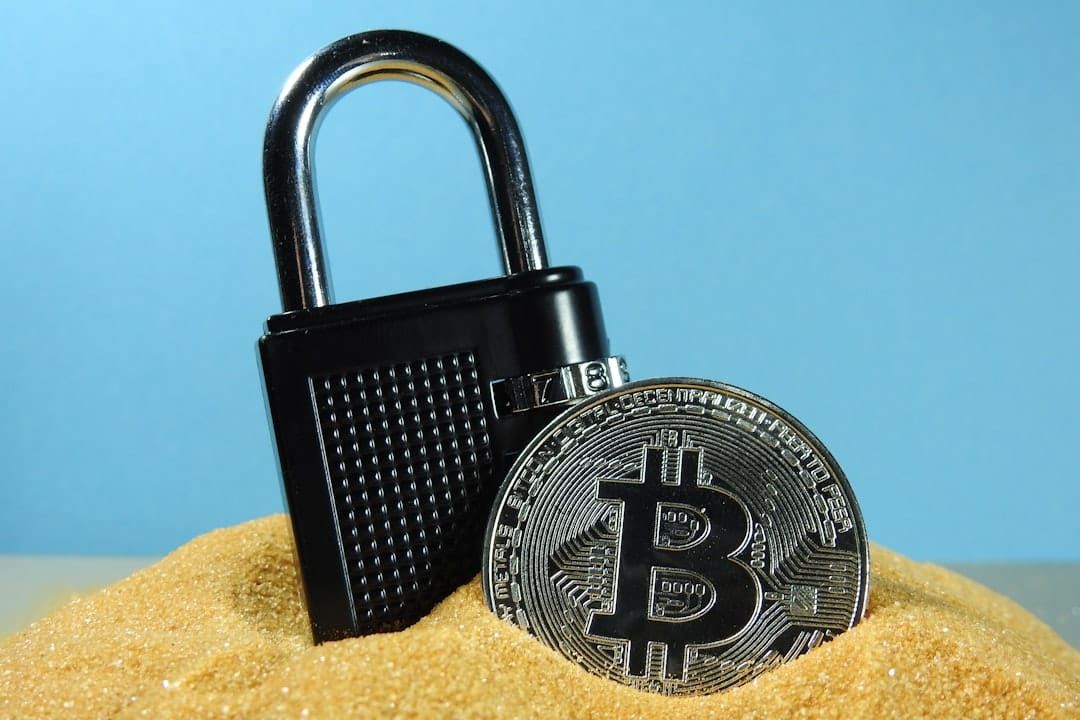
Imagine walking into a bank to exchange $50,000 cash, but instead of bulletproof glass and armed guards, you're doing it in a bustling marketplace where pickpockets, counterfeiters, and con artists roam freely. That's essentially what large cryptocurrency swaps on decentralized exchanges (DEXes) can feel like.
In April 2026 alone, over $605 million was stolen from 12+ DeFi platforms in under 20 days, including a $293 million hack of Kelp DAO and a $285 million social engineering attack on Drift Protocol. While DEXes promise "trustless" trading, the reality is more nuanced — especially when you're moving serious money.
Key Takeaways:Academic research analyzing 60 million DEX transactions found 671,400 unfair trades resulting in $3.88 million in proven losses, with DEX security risks concentrated in large swap transactions.Large swaps face unique risks including mempool frontrunning, sandwich attacks, and higher incentives for extractable value attacks targeting valuable transactions.April 2026 saw $605+ million stolen across 12+ DeFi platforms, with attacks ranging from social engineering to domain hijacking and smart contract exploits.DEX security depends heavily on user behavior — unlimited token approvals and wallet mistakes account for significant losses beyond protocol vulnerabilities.Cross-chain Bitcoin swaps using SPV light client verification offer trust-minimized alternatives to custodial wrapped Bitcoin solutions.
Table of Contents
- What Makes DEX Swaps Feel Risky?
- The Anatomy of Large Swap Attacks
- Why Size Matters: How Large Swaps Attract Attackers
- DEX vs CEX Security: The Real Trade-offs
- Building True Trustless Infrastructure
- How to Protect Yourself During Large Swaps
- Frequently Asked Questions
What Makes DEX Swaps Feel Risky?
To understand why large DEX swaps feel dangerous, let's first clarify what we're dealing with. A decentralized exchange (DEX) is a non-custodial platform where users trade cryptocurrency directly from their wallets using automated smart contracts, eliminating the need for a central intermediary.
The promise sounds amazing: No middleman, no central authority, no need to trust anyone with your funds. But here's the catch — that system is sitting in a Wild West frontier town, and the "automatic" process involves several moving parts that can go wrong.
The core tension is this: DEXes eliminate counterparty risk (the risk that your trading partner disappears with your money) but introduce protocol risk (the risk that the underlying system itself is compromised or exploited).
Think of it like replacing a potentially dishonest banker with a potentially buggy robot.
The robot won't steal from you intentionally, but it might have programming flaws that clever attackers can exploit.
The Anatomy of Large Swap Attacks
Recent academic research provides a sobering look at what actually happens on DEXes. A comprehensive study analyzing 60 million transactions across Ethereum and Binance Smart Chain found several attack patterns targeting large swaps specifically.
Extractable Value Attacks: The $239,000 Case Study
Consider the case of attacker account 0x2a2e, who executed 32 unfair trades and stole over $239,000.
Here's how it worked:
- Mempool Monitoring: The attacker's smart contract continuously scanned pending transactions for profitable opportunities
- Timing Exploitation: When someone submitted a large swap, the attacker would quickly insert their own transaction
- Atomic Sandwich: The malicious transaction would execute in the same block, stealing extractable value before the victim's swap completed
The pattern revealed something crucial: larger swaps attracted faster, more aggressive attacks. When more money was at stake, attackers paid higher gas fees to beat competitors, resulting in smaller "block gaps" between the victim's transaction and the attack.
Social Engineering: The Human Element
But not all attacks target the blockchain directly. In April 2026, North Korean-linked actors used AI-powered social engineering to compromise a Zerion employee's device, exposing private keys to hot wallets.
While user funds remained protected, the incident demonstrates how attackers increasingly target the human infrastructure around DeFi protocols.
The CoW Swap domain hijacking attack shows another vector: attackers impersonated company staff to gain control of the domain, redirecting users to a visually identical fake website. Users performing large swaps lost $1.2 million before the attack was discovered.
Why Size Matters: How Large Swaps Attract Attackers
Large cryptocurrency swaps face unique risks that small trades simply don't encounter.
It's the difference between carrying $20 cash versus $20,000 — the same street might be safe for one but dangerous for the other.
The Incentive Problem
Every large swap creates what economists call "extractable value" — profit opportunities for anyone clever enough to exploit timing, pricing, or technical vulnerabilities. The bigger your swap, the bigger the potential profit for attackers.
Research data backs this up. Analysis of interest-bearing token attacks revealed that sophisticated attackers (accounts 0xdb40 & 0x5617) demonstrated "strategic patience," waiting 665-1574 blocks for token interest to accumulate before striking. They waited for the value to be worth the effort.
Gas War Economics
When you submit a large swap, it becomes visible in the "mempool" — crypto's equivalent of a public bulletin board showing pending transactions.
Attackers see your trade and compete to exploit it, bidding up gas prices to ensure their transactions execute first. This creates a perverse dynamic: the larger your trade, the more valuable it becomes to exploit, the more attackers compete, and the higher the gas fees everyone pays.
Your large swap essentially triggers an auction where the prize is your money.
DEX vs CEX Security: The Real Trade-offs
The "DEX vs CEX" security debate isn't as clear-cut as advocates on either side claim. Both approaches involve fundamental trade-offs that become more pronounced with large swaps. For more context on this comparison, see MetaMask Swap vs DEX: Complete Guide for Beginners 2026.
| Risk Type | Centralized Exchange (CEX) | Decentralized Exchange (DEX) |
|---|---|---|
| Custody Risk | High - Exchange controls your keys | Low - You control your keys |
| Smart Contract Risk | None - No smart contracts involved | High - Protocol bugs can be exploited |
| User Error Risk | Low - Limited dangerous actions | High - Many ways to make costly mistakes |
| Regulatory Risk | High - Subject to government action | Medium - Frontend can be blocked |
| Large Trade Targeting | Low - Internal matching, no visibility | High - Public mempool exposure |
The Custody Paradox
CEXes follow the traditional banking model: they hold your money, you trust them to give it back. As Andreas Antonopoulos famously said, "Not your keys, not your coins."
If the exchange gets hacked, goes bankrupt, or freezes your account, your funds can disappear regardless of your personal security practices. DEXes flip this model: you keep your keys, but now you're responsible for every security decision.
Approve unlimited token access to a malicious contract? Your wallet gets drained. Interact with a compromised frontend? You might lose everything. Connect to a fake website? Same result.
For large swaps, this trade-off becomes critical.
Building True Trustless Infrastructure
Trustless infrastructure eliminates the need to trust any central authority or custodian by using cryptographic verification to prove transaction validity mathematically rather than relying on intermediaries.
The Holy Grail of DeFi is "trustless" systems — protocols that work correctly without requiring trust in any central authority. But achieving true trustlessness, especially for cross-chain operations, requires sophisticated cryptographic infrastructure.
Consider Bitcoin-to-Ethereum swaps, one of the most common large-value DeFi operations. Traditional solutions like Wrapped Bitcoin (WBTC) require trusting a central custodian with billions in Bitcoin. When you deposit BTC to get WBTC, you're essentially using a cryptocurrency bank — defeating the decentralized purpose.
Newer approaches use light client verification and SPV (Simplified Payment Verification) proofs to verify Bitcoin transactions directly on other blockchains. As discussed in Best DEX for Cross-Chain Swaps: 2026 Complete Guide, trustless protocols enable BTC swaps across Ethereum, Polygon, and other networks by cryptographically proving Bitcoin transactions on-chain rather than relying on custodians or multi-signature committees.
This matters for large swaps because it eliminates what security experts call "single points of failure." Instead of trusting that a custodian won't lose, steal, or freeze your Bitcoin, the protocol mathematically verifies transaction validity using the same cryptographic proofs that secure Bitcoin itself.
The Infrastructure Evolution
True trustless infrastructure requires several components working together:
- Light Client Verification: Cryptographically verify transactions from other blockchains
- Atomic Swaps: Ensure either both sides of a trade complete or neither does
- Time-locked Contracts: Prevent funds from being stuck indefinitely
- Fraud Proofs: Allow anyone to prove invalid transactions and prevent theft
These technologies are maturing rapidly. What seemed impossible five years ago — trustlessly swapping Bitcoin for Ethereum tokens — now works reliably in production systems.
How to Protect Yourself During Large Swaps
Given the risks we've outlined, how can you safely execute large cryptocurrency swaps? The key is layered security — multiple protection strategies working together.
Before the Swap: Preparation
1. Audit Your Wallet Security
- Use hardware wallets for large transactions
- Never approve unlimited token access
- Review existing approvals using tools like Etherscan's token approval checker
2. Verify the Platform
- Always type URLs manually or use bookmarks
- Check SSL certificates and domain authenticity
- Use official app stores or verified links from the project's social media
3. Understand the Protocol
- Read audit reports for DEXes you're using
- Understand the trust assumptions (custodial vs non-custodial)
- Check if the protocol has insurance or emergency procedures
During the Swap: Execution
Split Large Trades: Instead of one $100,000 swap, consider five $20,000 swaps spread across time. This reduces your mempool exposure and limits per-transaction risk.
Use MEV Protection: Some DEXes now offer "private mempools" or MEV (Maximal Extractable Value) protection services. These hide your transaction from sandwich attackers until it executes.
Monitor Gas Prices: Unusual gas price spikes during your transaction might indicate sandwich attacks in progress. Some wallets can detect and warn about this.
After the Swap: Verification
Confirm Receipt: Don't assume success until you see the tokens in your wallet and the transaction confirms on-chain.
Revoke Unnecessary Approvals: After completing swaps, revoke token approvals you no longer need to minimize future attack surface.
Document Everything: Keep transaction hashes and timestamps for tax reporting and potential dispute resolution.
Frequently Asked Questions
Are DEXes actually safer than centralized exchanges for large trades?
It depends on your specific risk profile and technical expertise. DEXes eliminate custody risk (the exchange can't steal or freeze your funds) but introduce smart contract risk and user error risk. For large trades, CEXes often provide better protection against sophisticated attacks like MEV extraction, while DEXes give you more control over security decisions. The safest approach often involves using both types of platforms strategically.
What makes a cryptocurrency swap "large" in terms of security risk?
Swaps above $10,000-50,000 typically face increased targeting from sophisticated attackers. Research shows attackers demonstrate "strategic patience" and compete more aggressively (paying higher gas fees) when extractable value exceeds certain thresholds. The exact threshold varies by network and market conditions, but swaps in the five-figure range begin attracting automated extraction attempts.
How do sandwich attacks work on large DEX swaps?
Sandwich attacks involve placing transactions immediately before and after your swap to profit from price impact. Attackers monitor the mempool for large pending swaps, then submit their own buy order (driving up price), let your swap execute at the inflated price, then immediately sell (profiting from the difference). Academic research found over 671,400 unfair trades using variations of this technique across major DEXes.
Can I completely eliminate risks when using DEXes for large swaps?
No system can eliminate all risks, but you can significantly reduce them through proper preparation and execution strategies. Key protections include using hardware wallets, splitting large trades into smaller ones, using MEV-protected transaction pools, verifying platform authenticity, and never approving unlimited token access. The goal is risk management, not risk elimination.
What is trustless trading and how does it differ from regular DEX trading?
Trustless trading eliminates the need to trust any central authority or custodian through cryptographic verification, while regular DEX trading often still involves trust assumptions like trusting bridge operators or wrapped token custodians. True trustless trading uses techniques like SPV light client proofs to verify transactions across blockchains mathematically, without relying on intermediaries who could potentially steal, lose, or freeze funds.
How do I verify if a DEX is actually secure for large transactions?
Check for recent security audits from reputable firms, review the protocol's track record and total value locked (TVL), and understand the trust assumptions. Look for protocols with bug bounty programs, emergency pause mechanisms, and transparent governance. For cross-chain swaps, verify whether the protocol uses custodial bridges (higher risk) or cryptographic proof systems (lower risk). Tools like DefiLlama can help assess protocol maturity and security practices. Also review DeFi Hacks April 2026: 10+ Protocol Exploits Analyzed to understand recent attack patterns.
What should I do if I suspect my large swap was attacked or exploited?
Immediately document all transaction details and contact the DEX's support team if available. Save transaction hashes, timestamps, wallet addresses involved, and any error messages. Check blockchain explorers to understand what actually happened on-chain. If funds were stolen, report to relevant authorities and consider consulting with crypto recovery specialists, though recovery is often impossible due to the irreversible nature of blockchain transactions.
Conclusion
Large DEX swaps feel risky because they genuinely involve complex trade-offs between different types of risk. While DEXes eliminate custody risk and provide greater financial sovereignty, they introduce smart contract vulnerabilities, user error possibilities, and sophisticated attack vectors that specifically target high-value transactions.
The key insight is that "trustless" doesn't mean "riskless." It means replacing trust in people with trust in mathematics and code. For this to work safely, you need robust cryptographic infrastructure, careful security practices, and realistic expectations about the current limitations of DeFi technology.
As the space matures, we're seeing genuine innovations in trustless infrastructure — like SPV-verified cross-chain swaps and MEV-protected transaction pools — that address many of these concerns. But until these solutions become standard, large DEX swaps require the same careful risk assessment you'd apply to any significant financial decision.
Ready to explore truly trustless cross-chain Bitcoin swaps? Try Teleswap to experience SPV light client verification in action, or continue learning about DeFi security at academy.teleswap.xyz.