Best Chainflip Alternative 2026: Top Trustless Bitcoin Bridges


Searching for a reliable chainflip alternative to move your Bitcoin across different blockchains? You're not alone. With Chainflip processing over $6.45 billion in swaps but facing limitations in chain coverage and native asset pairing, many users are exploring other options for trustless Bitcoin bridging in 2026.
The cross-chain landscape has evolved dramatically. While Chainflip pioneered validator-secured Bitcoin swaps, newer protocols offer broader chain support, lower fees, and innovative security models that might better suit your needs.
Key Takeaways:Teleswap offers the most trustless Bitcoin bridge using SPV light client proofs, eliminating custodians entirely across 9 chains including Ethereum, Solana, and Base.Chainflip has processed $6.45B in volume but limits users to USDC routing and only 4 supported chains as of June 2026.Intent-based protocols like Relay and aggregators like Rubic are replacing traditional lock-and-mint bridges as the industry standard.THORChain remains a strong chainflip alternative with broader chain coverage and peer-reviewed security architecture.Bridge aggregators now provide 90+ blockchain coverage compared to individual protocols' limited chain support.
Table of Contents
- What is Chainflip and Why Look for Alternatives?
- 5 Best Chainflip Alternatives for Bitcoin Bridges
- Complete Feature Comparison Table
- How to Choose the Right Bitcoin Bridge
- Step-by-Step: Using Teleswap for Bitcoin Swaps
- Frequently Asked Questions
What is Chainflip and Why Look for Chainflip Alternatives?
Think of Chainflip as a decentralized exchange that specializes in swapping Bitcoin, Ethereum, and other native cryptocurrencies without requiring you to trust a central company. Unlike traditional exchanges where you deposit funds and hope they're safe, Chainflip uses a network of 150 validators (computer operators) who collectively secure your funds using advanced cryptography.
Here's how Chainflip works in simple terms: When you want to swap Bitcoin for Ethereum, the validator network creates a temporary "vault" that holds your Bitcoin while simultaneously releasing the equivalent Ethereum to your wallet. It's like having 150 trusted friends collectively hold your keys instead of one person.
However, Chainflip has several limitations that drive users to seek chainflip alternative solutions:
- Limited chain support: Only Bitcoin, Ethereum, Solana, and Tron as of June 2026
- USDC routing requirement: All swaps must go through USDC as an intermediate step, increasing complexity and potential slippage
- Validator dependency: Requires 100 out of 150 validators to be online and honest
- High technical barrier: Complex for beginners compared to simple aggregator interfaces
The result? While Chainflip has achieved impressive metrics—$6.45 billion in total volume and 14.39% staking rewards—users often need alternative solutions for broader blockchain coverage, direct asset pairing, or simpler user experiences.
5 Best Chainflip Alternatives for Bitcoin Bridges
1. Teleswap - Most Trustless Bitcoin Bridge
Best for: Users who prioritize maximum security and true decentralization
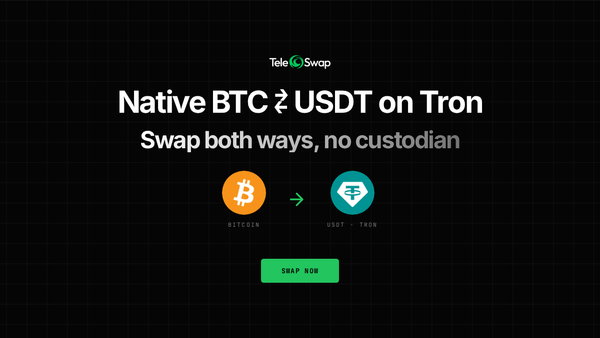
Teleswap represents the next evolution in trustless bitcoin bridge technology. Instead of relying on validators or custodians like other solutions, Teleswap uses SPV (Simplified Payment Verification) light client proofs to verify Bitcoin transactions directly on the destination blockchain. Teleswap is a Bitcoin bridge protocol that eliminates intermediaries by cryptographically verifying transactions on-chain rather than relying on validators or custodians to hold your assets.
Here's the key difference: When you use WBTC, you're trusting BitGo to hold your real Bitcoin. When you use Chainflip, you're trusting 100+ validators. With Teleswap as a chainflip alternative, you're trusting the same cryptographic proofs that secure Bitcoin itself—no intermediaries required.
Key advantages as a Chainflip alternative:
- 9 supported chains: Ethereum, Base, Polygon, Arbitrum, BSC, Optimism, TON, Unichain, and Solana
- True trustlessness: No validators, custodians, or multi-sig committees
- Direct Bitcoin verification: Each transaction is cryptographically verified on-chain
- Integrated everywhere: Built into MetaMask, Trust Wallet, Rubic, and Rango
The trade-off? Teleswap currently focuses specifically on Bitcoin bridging, whereas Chainflip supports multiple native assets. However, for Bitcoin-specific use cases, Teleswap offers superior security guarantees.
2. THORChain - Broader Chain Coverage
Best for: Users who need extensive blockchain support with proven security
THORChain operates on a similar principle to Chainflip but has been battle-tested longer and supports more blockchains. THORChain is a validator-secured cross-chain DEX that enables swaps across 8+ major blockchains with peer-reviewed security architecture. Think of it as Chainflip's older, more experienced sibling that has weathered multiple market cycles.
Like Chainflip, THORChain uses validator networks to secure cross-chain swaps. However, THORChain's architecture has undergone extensive peer review and offers native support for more blockchain ecosystems, making it a natural chainflip alternative for users needing broader coverage.
Key advantages:
- More supported blockchains than Chainflip's current 4-chain limit
- Battle-tested security model with years of operation
- Strong DeFi ecosystem integration
- Competitive fees similar to Chainflip's 1-10 basis points
3. Rubic Exchange - Aggregator Approach
Best for: Users who want access to the best rates across multiple bridges
Instead of being a single bridge, Rubic acts like a smart shopping assistant that checks 30+ different bridges to find you the best deal. Rubic is a cross-chain swap aggregator that compares rates across 30+ bridge protocols and 90+ blockchains to ensure optimal pricing and maximum coverage. When you want to swap Bitcoin for a token on another blockchain, Rubic compares rates from Chainflip, THORChain, and dozens of other protocols to ensure you get optimal pricing.
According to StableCoin Insider, Rubic covers 90+ blockchains and 15,500+ assets—far exceeding any single bridge protocol's coverage, making it an excellent chainflip alternative for maximum reach.
Key advantages:
- Massive coverage: 90+ blockchains vs Chainflip's 4
- Rate optimization across 30+ bridge protocols
- Single interface for all cross-chain swaps
- Includes Teleswap's trustless Bitcoin bridging as one routing option
4. Relay - Intent-Based Swapping
Best for: Users who prioritize speed and simplicity
Relay represents the newest approach to cross-chain swaps called "intent-based" protocols. Relay is an intent-based cross-chain swap protocol that automatically determines the optimal routing path without requiring users to manually select individual bridges. Instead of you manually choosing which bridge to use, you simply state your intent ("I want USDC on Arbitrum") and Relay figures out the optimal path automatically.
This approach has gained significant traction in 2026 as the industry moves away from manual bridge selection toward automated routing. According to Relay's 2026 analysis, intent-based protocols are positioning themselves as the fastest and most flexible chainflip alternative available.
Key advantages:
- Automatic optimal routing selection
- Fast execution times
- KYC-free operation
- Simplified user experience for beginners
5. Stargate Finance - Stablecoin Specialist
Best for: Users primarily moving stablecoins between chains
If your main use case involves moving USDC, USDT, or other stablecoins across different blockchains, Stargate offers a specialized solution. Stargate Finance is a LayerZero-based stablecoin bridge connecting 40+ blockchains with native token transfers and no wrapped asset requirements. Built on LayerZero technology, Stargate connects 40+ blockchains with a focus on maintaining stablecoin liquidity without creating wrapped versions.
While not a direct Bitcoin bridge like Chainflip, Stargate excels at the stablecoin portion of multi-hop swaps. Many users combine Stargate with other protocols: convert Bitcoin to USDC locally, then use Stargate to move USDC to their target chain, making it a useful complement to other chainflip alternatives.
Key advantages:
- 40+ supported blockchains
- 0.06% flat fee structure
- Native USDC transfers (no wrapped tokens)
- High liquidity for stablecoin pairs
Complete Feature Comparison Table
| Protocol | Security Model | Supported Chains | Fee Structure | Bitcoin Support | Best Use Case |
|---|---|---|---|---|---|
| Chainflip | 150 validators, MPC vaults | 4 (BTC, ETH, SOL, TRON) | 1-10 bps | Native BTC | CEX-competitive pricing |
| Teleswap | SPV light client proofs | 9 (ETH, Base, Polygon, etc.) | Competitive | Trustless native BTC | Maximum security |
| THORChain | Validator network | 8+ major chains | 1-10 bps | Native BTC | Proven reliability |
| Rubic | Multi-bridge aggregation | 90+ blockchains | Variable by route | Via integrated bridges | Maximum coverage |
| Relay | Intent-based routing | Major EVM + others | Undisclosed | Via routing partners | Speed and simplicity |
| Stargate | LayerZero omnichain | 40+ blockchains | 0.06% | No (stablecoins only) | Stablecoin transfers |
Data sources: Chainflip official blog, StableCoin Insider 2026 analysis, and individual protocol documentation.
How to Choose the Right Bitcoin Bridge for Your Needs
With so many chainflip alternative options available, choosing the right trustless bitcoin bridge depends on your specific needs. Here's a decision framework based on 2026 industry best practices:
For Maximum Security (Trustlessness)
Choose Teleswap if eliminating all intermediaries is your top priority. The SPV light client approach means you're trusting the same cryptographic proofs that secure Bitcoin itself, with no validators, custodians, or governance tokens that could be compromised. This makes it the most secure chainflip alternative available.
For Broad Chain Coverage
Choose Rubic or THORChain if you need to move Bitcoin to chains that Chainflip doesn't support. Rubic's 90+ blockchain coverage via aggregation gives you the most options, while THORChain offers proven reliability across major chains. Both represent excellent chainflip alternatives when chain support is your primary concern.
For Lowest Fees
Compare Chainflip vs THORChain directly—both offer 1-10 basis point fees that compete with centralized exchanges. However, factor in additional costs: Chainflip requires USDC routing which adds slippage, while THORChain often provides more direct pairs. For detailed fee comparisons across DeFi protocols, refer to our comprehensive guide.
For Beginners
Start with Relay or Rubic for their simplified interfaces. Both handle the complex routing decisions automatically, so you can focus on your desired outcome rather than bridge mechanics. These chainflip alternatives abstract away technical complexity entirely.
For DeFi Integration
Consider Teleswap's TeleBTC for projects requiring programmable Bitcoin on EVM chains. Unlike centralized wrapped Bitcoin (WBTC), TeleBTC maintains trustlessness while offering full smart contract compatibility, making it an ideal chainflip alternative for developers.
The key insight from 2026 bridge analysis: Intent-based protocols and aggregators are becoming the industry standard because they abstract away the complexity of choosing individual bridges.
Step-by-Step: Using Teleswap for Bitcoin Swaps
Let's walk through a practical example of using Teleswap, the most trustless chainflip alternative, to swap Bitcoin for USDC on Ethereum:
Step 1: Access Teleswap
Navigate to app.teleswap.xyz or access Teleswap through integrated wallets like MetaMask or Trust Wallet. The interface works directly in your browser—no downloads required.
Step 2: Connect Your Wallets
You'll need two connections: your Bitcoin wallet (like Electrum or a hardware wallet) and your Ethereum wallet (like MetaMask). Teleswap supports both wallet types simultaneously.
Step 3: Specify Your Swap
Enter the amount of Bitcoin you want to swap and select USDC on Ethereum as your target. Teleswap will calculate the exact exchange rate and show you the expected output amount.
Step 4: Review the SPV Proof Process
Unlike Chainflip's validator-based approach, Teleswap will show you that your Bitcoin transaction will be verified using SPV proofs—the same technology Bitcoin uses internally. This means no third parties need to be trusted.
Step 5: Execute and Monitor
Send your Bitcoin to the provided address. Teleswap's light client will detect your transaction on the Bitcoin network and automatically release USDC to your Ethereum wallet once the transaction is confirmed and verified.
Key advantage: Throughout this entire process, your funds are never held by validators or custodians. The cryptographic proofs ensure that only you can claim the output tokens, making this the most trustless bitcoin bridge available.
The entire swap typically takes 30-60 minutes depending on Bitcoin network confirmation times—comparable to Chainflip's execution speed but with superior security guarantees. For more detailed information on executing swaps securely, see our guide on safely bridging BTC to Ethereum.
Frequently Asked Questions
What makes Teleswap more trustless than Chainflip?
Teleswap eliminates all intermediaries by using SPV light client proofs to verify Bitcoin transactions directly on the destination blockchain. Chainflip requires trust in 100 out of 150 validators to operate honestly, while Teleswap uses the same cryptographic proofs that secure Bitcoin itself. This means no validators, custodians, or governance tokens can compromise your funds, making Teleswap the most trustless chainflip alternative.
Can I use Chainflip alternatives for other cryptocurrencies besides Bitcoin?
Yes, most Chainflip alternatives support multiple cryptocurrencies, but coverage varies by protocol. THORChain supports native Bitcoin, Ethereum, and several other major cryptocurrencies. Rubic aggregates 15,500+ assets across 90+ blockchains through its bridge routing. Teleswap currently specializes in Bitcoin bridging but offers the highest security for BTC-specific use cases.
Are bridge aggregators like Rubic safer than individual bridges?
Bridge aggregators don't improve the security of individual bridges—they just give you more routing options. When Rubic routes your swap through Chainflip, you're still subject to Chainflip's validator security model. However, aggregators can help you avoid bridges with known security issues by automatically routing around them, and they often provide insurance or compensation mechanisms. This makes aggregators a valuable safeguard even if they don't replace the importance of choosing a secure chainflip alternative.
How do fees compare between Chainflip and its alternatives?
Chainflip and THORChain both offer 1-10 basis point fees, making them the cheapest options for supported routes. However, factor in additional costs: Chainflip requires USDC routing which adds slippage, while aggregators like Rubic may find cheaper total costs by combining multiple protocols. Teleswap's fees are competitive but prioritize security over lowest cost. For comprehensive fee analysis across DeFi options, see our guide on low-fee BTC to USDT swaps.
What happens if a cross-chain bridge fails or goes offline?
The risk depends on the bridge's architecture and your timing. With Chainflip, if validators go offline during your swap, funds could be temporarily locked until the network recovers. Teleswap's SPV approach eliminates this risk since verification happens cryptographically rather than through live validators. Aggregators like SwapKit automatically fall back to alternative bridges if one becomes unavailable, though this still depends on underlying bridge reliability.
Which chainflip alternative is best for beginners?
Rubic and Relay offer the most beginner-friendly interfaces since they handle complex routing decisions automatically. Both protocols abstract away the technical details of bridge selection, letting you focus on your desired outcome. Teleswap requires slightly more understanding of Bitcoin mechanics but provides the highest security once you're comfortable with the process. For step-by-step guidance, see our beginner's guide to bridging Bitcoin to Ethereum.
Does Teleswap work with all Bitcoin wallet types?
Yes, Teleswap supports all standard Bitcoin wallet formats including hardware wallets, mobile wallets, and desktop clients. The SPV proof system works with any wallet that can generate standard Bitcoin transactions. This includes popular options like Ledger, Trezor, Electrum, and mobile wallets like Trust Wallet or MetaMask's Bitcoin support, making it accessible regardless of your wallet choice.
Conclusion
While Chainflip has established itself as a solid validator-secured bridge with $6.45 billion in processed volume, the 2026 landscape offers compelling chainflip alternatives that address its key limitations. For users seeking maximum trustlessness, Teleswap's SPV light client approach eliminates intermediaries entirely. For broader coverage, aggregators like Rubic provide access to 90+ blockchains compared to Chainflip's 4-chain limit.
The trend toward intent-based protocols and aggregation suggests that single-bridge solutions may become less relevant as users demand seamless routing across multiple options. However, for Bitcoin-specific use cases requiring the highest security guarantees, trustless solutions like Teleswap represent the evolution toward true decentralization.
Ready to experience the most secure Bitcoin bridging available? Try Teleswap's revolutionary SPV-based approach that eliminates custodians and validators entirely.