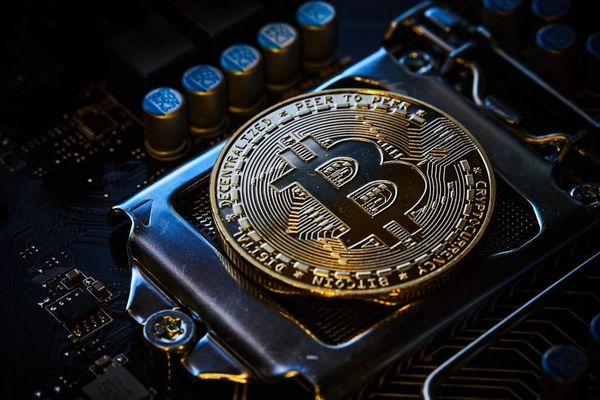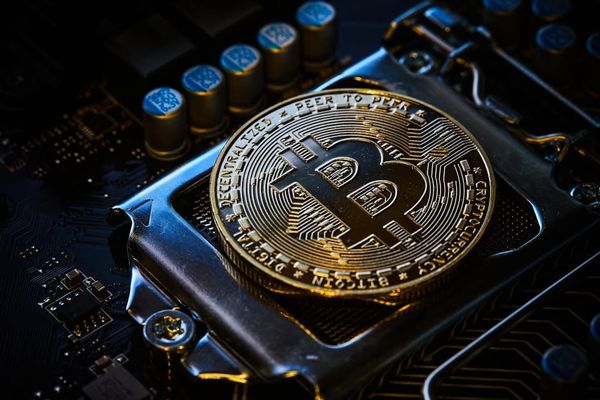
Traditional Brokers Bitcoin Custody: What It Means for DeFi


Key Takeaways:Major traditional financial institutions — including Citibank and BNY Mellon — are launching Bitcoin custody services in 2025–2026, marking a historic shift in how Wall Street treats crypto.Traditional brokers bring regulatory compliance and institutional trust to Bitcoin, but they also reintroduce the centralized gatekeepers that DeFi was designed to remove.A Bitcoin bridge is the technology that lets BTC move from the Bitcoin blockchain onto other networks where DeFi applications live — and it sits at the heart of this institutional push.Trust-minimized bridges like TeleSwap use cryptographic light-client proofs instead of custodians, offering an alternative path that doesn't depend on a bank's permission.Institutional crypto adoption is accelerating: the digital asset custody market is forecast to grow significantly through 2035, driven by regulatory clarity and demand for secure storage.
Table of Contents
- Why This Moment Matters
- What Is Bitcoin Custody, Exactly?
- Who Is Entering the Market — and Why Now?
- Traditional Brokers vs. DeFi: How They Compare
- Bitcoin Bridge Explained: The Missing Link
- What Institutional Adoption Means for Everyday Crypto Users
- Practical Takeaways
- Frequently Asked Questions
Why This Moment Matters
Imagine your grandmother's bank — the one with marble floors, a velvet rope, and a stern teller — announcing it will now hold Bitcoin for customers. In 2026, that's exactly what's happening across Wall Street. Traditional brokers bitcoin custody is no longer a niche service; it's becoming a competitive battleground between Citibank, BNY Mellon, and other legacy financial institutions rushing to capture institutional demand for regulated Bitcoin storage.
For years, Bitcoin was something traditional finance quietly ignored, then loudly mocked, and then cautiously studied. In 2026, they're building vaults for it.
Citibank is targeting a crypto custody launch this year. BNY Mellon — one of the oldest and largest custodian banks in the world — has already moved in. This isn't a trend anymore. It's a structural shift.
But here's the question that matters most for anyone who cares about crypto: when traditional brokers enter Bitcoin custody services, what happens to the decentralized, open, permissionless world that Bitcoin and DeFi were built to create?
This article answers that question from the ground up — no jargon, no assumed knowledge, just a clear map of what's changing and what it means for you.
What Is Bitcoin Custody, Exactly?
Before we talk about who's entering the market, it helps to understand what "custody" actually means in the crypto world.
In traditional finance, if you buy shares of Apple through a broker, you don't physically hold the stock certificate — your broker holds it on your behalf. You see a number in an account. That's custody: someone else safeguards the asset while you retain the right to sell or transfer it.
Bitcoin works differently by design. When you hold Bitcoin yourself, you control a private key — a long, unique password that proves ownership on the blockchain. There's no bank in the middle. Lose the key, lose the Bitcoin. But also: no bank can freeze your funds, no court order can easily block a transaction, and no company's bankruptcy can wipe out your balance.
Bitcoin custody is when a company (a broker, a bank, or a specialized firm) holds a user's private key on their behalf — the crypto equivalent of a brokerage account. It's convenient. It's familiar. And it reintroduces a middleman.
For retail investors who want Bitcoin exposure without the complexity of self-custody, this is attractive. For institutions like pension funds or hedge funds that are legally required to use regulated custodians, it's practically mandatory. That's the demand traditional brokers are rushing to meet.
Who Is Entering the Market — and Why Now?
The timing isn't accidental. Two things collided in 2024–2025 to open the floodgates.
First, regulatory clarity. The Trump administration's approach to digital assets created a more welcoming environment for traditional financial institutions. Landmark legislation like the GENIUS Act — which established formal rules for stablecoins — gave banks a legal framework to operate in. When regulators draw lines on a map, banks know where they can build, according to CNBC.
Second, demand from institutional clients. Endowments, family offices, and corporate treasuries have been asking their existing brokers and banks to handle crypto for years. Rather than lose those clients to crypto-native firms, traditional institutions decided to compete.
The result is a wave of institutional crypto adoption in 2025–2026 that's reshaping the competitive landscape. Top custodians are now competing on features that would have seemed science-fiction five years ago: sub-15-minute settlement speeds for active treasury operations, quantum-resistant cryptography aligned with NIST's post-quantum standards, and AI-powered anomaly detection — according to Cobo's 2026 custodian analysis.
This isn't just about Bitcoin, either. ETH staking yields in the 3–4% range are drawing institutions who want their digital assets to generate income, not just sit idle. As documented in the Ethereum Protocol Coordination & Bitcoin DeFi guide, institutional players are increasingly exploring yield strategies across multiple blockchains.
Traditional Brokers vs. DeFi: How They Compare
Here's where the story gets interesting — and a little complicated. Traditional finance and DeFi aren't just different products. They represent fundamentally different philosophies about who should be in control.
Think of it this way. In traditional finance, when you want to lend money to a stranger, you go through a bank. The bank checks your credit, sets the interest rate, holds the collateral, and enforces the contract if someone defaults.
In DeFi, a smart contract does all of that automatically — no bank, no loan officer, no business hours.
The table below maps how each system handles the same financial services, using the framework from a Bank of Canada research note on decentralized finance:
| Service | Traditional Finance | Centralized Crypto (CeFi) | DeFi (Decentralized) |
|---|---|---|---|
| Funds Transfer | Wire transfers, SWIFT | Centralized stablecoins (e.g., USDT) | On-chain stablecoins (e.g., DAI) |
| Asset Trading | Exchanges & OTC brokers | Centralized exchanges (e.g., Binance) | DEXs (e.g., Uniswap) |
| Lending | Banks, broker-dealers | Centralized platforms | Decentralized protocols (e.g., Aave) |
| Investment | Investment funds | Crypto funds (e.g., Grayscale) | Decentralized asset management (e.g., Yearn) |
| Custody | Bank vaults, prime brokers | Exchange wallets | Self-custody (private keys) |
When traditional brokers enter Bitcoin custody, they're essentially building the centralized crypto column — but with bank-grade compliance, tax reporting, KYC/AML systems, and regulatory oversight baked in. The Bank for International Settlements describes this as centralized entities serving as "entry nodes" — gatekeepers who monitor transactions and link them to identities for tax authorities like the IRS.
DeFi, by contrast, runs on distributed networks where smart contracts execute automatically, verified by network consensus rather than any single company. No gatekeepers. Open to anyone with an internet connection.
The trade-off is real on both sides:
- Traditional custody wins on: regulatory compliance, insurance, familiar interfaces, integration with existing financial systems, and customer support when something goes wrong.
- DeFi wins on: 24/7 operation, lower transaction costs (no intermediary markup), transparency (all code is visible on-chain), and user control over private keys.
Neither model is universally better. They serve different needs — and increasingly, they're starting to interact with each other in ways that require specific infrastructure. Understanding this hybrid landscape is critical for making informed decisions about where to custody your assets, which is why the non-custodial Bitcoin exchange guide and resources on bank crypto wallet integration are becoming essential reading.
Bitcoin Bridge Explained: The Missing Link
Here's something that surprises many newcomers: Bitcoin and Ethereum are completely separate blockchains. They can't talk to each other natively. Bitcoin doesn't understand Ethereum smart contracts. Ethereum doesn't know what's happening on the Bitcoin blockchain.
So how does an institution that holds Bitcoin in custody actually use DeFi — or allow clients to move their BTC into Ethereum-based applications? That's where a Bitcoin bridge comes in.
A Bitcoin bridge is technology that allows Bitcoin to move from the Bitcoin blockchain onto another blockchain — such as Ethereum — where it can be used in DeFi applications and yield strategies. Think of it like a currency exchange desk at an airport. You walk in with euros, and you walk out with dollars. The desk holds your euros and gives you an equivalent amount of dollars you can spend locally. A Bitcoin bridge works similarly: you send your BTC, and you receive a "wrapped" version — a token on another blockchain that represents your Bitcoin and can be used in DeFi applications.
The critical question is: who holds the original BTC while you're using the wrapped version?
This is where the design choices get consequential. Most wrapped Bitcoin solutions today involve custodians, multi-signature committees, or institutional partners who hold the underlying BTC. If that custodian is hacked, goes bankrupt, or acts dishonestly, your wrapped Bitcoin could become worthless. It's happened before in crypto history.
A more secure alternative uses what's called a light-client proof — also known as an SPV (Simplified Payment Verification) proof. Instead of trusting a company to honestly report what's on the Bitcoin blockchain, the bridge mathematically verifies Bitcoin transactions using cryptographic proofs. No human in the loop. No company to go bankrupt. The math does the verification.
This is the approach TeleSwap takes. TeleSwap is a non-custodial Bitcoin bridge that uses SPV light-client proofs to verify Bitcoin transactions on-chain, minting TeleBTC — a 1:1 collateral-backed representation of BTC — without relying on any custodian or multi-sig committee. Users can bridge BTC to 13 supported networks and swap into ERC-20 tokens, Jettons, or SPL tokens, all without a bank's permission. As of July 2026, TeleSwap has processed over $417.5 million in total bridged volume across 421,838 transactions, according to TeleSwap network stats.
That's the contrast worth understanding: traditional brokers entering Bitcoin custody bring Bitcoin closer to legacy finance infrastructure. Trust-minimized bridges bring Bitcoin closer to open, permissionless DeFi — and the two paths are heading in very different directions. For those exploring the trust-minimized approach, the bridge Bitcoin to Ethereum guide provides practical context on how different bridge architectures affect security.
What Institutional Adoption Means for Everyday Crypto Users
So the big institutions are building Bitcoin vaults. Should you care? Actually, yes — and for reasons that cut in both directions.
The good news
Institutional adoption brings liquidity. More capital flowing into Bitcoin markets generally means tighter spreads, deeper order books, and potentially lower volatility over time.
It also brings legitimacy — when Citibank offers Bitcoin custody, it signals to regulators, skeptics, and the general public that this asset class has staying power. There's also a compliance dividend. Traditional institutions entering crypto are building the tax reporting infrastructure, audit trails, and AML monitoring that regulators have been demanding for years. That reduces the regulatory risk hanging over the entire industry — a risk that has caused market-wide crashes in the past when enforcement actions landed unexpectedly.
The honest concern
Here's the nuance that most bullish institutional adoption coverage glosses over: every major financial institution that enters Bitcoin custody is, by design, rebuilding the centralized infrastructure that Bitcoin was partly invented to route around.
When your Bitcoin is held by Citi or BNY Mellon, you don't hold the private key. You hold a claim. That's a meaningful difference — one that Satoshi Nakamoto's original Bitcoin whitepaper was explicitly written to address. Financial crises, bank failures, and account freezes are exactly the failure modes Bitcoin was designed to prevent.
This isn't an argument against institutional adoption. It's an argument for understanding what you're actually choosing when you use a custodial service versus a non-custodial one. Both have legitimate uses. But they are not equivalent.
The emerging hybrid reality
What we're actually heading toward is a layered ecosystem. Institutions hold BTC in regulated custody. They use Bitcoin bridges to move assets onto other chains for yield or DeFi exposure.
Some of those bridges are custodial (and carry counterparty risk). Some are trust-minimized (and verify cryptographically). Users who understand the difference will make better decisions about where their risk actually lives. Regulatory clarity — like the framework enabled by legislation in 2025 — is accelerating the convergence of traditional finance and DeFi that industry observers have predicted for years. The digital asset custody market is now forecast to grow significantly through 2035, driven by exactly this institutional demand.
Practical Takeaways
Whether you're new to crypto or have been watching from the sidelines, here are concrete things to take away from this shift:
- Understand custody before you commit. If you hold Bitcoin through a broker or exchange, you don't hold the private key — you hold a promise. That's fine for many purposes, but know what you're choosing.
- Ask who holds the underlying BTC. When using any wrapped Bitcoin product or bridge, the most important question is who or what verifies that your Bitcoin is actually locked. A cryptographic proof is more secure than a company's promise.
- Institutional adoption doesn't mean DeFi is dying. It means DeFi has to compete — and in some ways, competition makes the trust-minimized alternatives more valuable, not less. The open protocols that offer genuine decentralization become clearer in contrast to the custodial ones.
- Regulatory clarity is a double-edged sword. Rules that protect consumers and reduce fraud also tend to require identity verification, reporting, and compliance overhead. More regulation = more institutional comfort, but also more gatekeepers.
- Bridges are infrastructure, not an afterthought. Whether you're an institution moving BTC across chains or a retail user trying to access DeFi yields, the bridge you use is a critical security decision. Evaluate it accordingly.
If you want to explore the trust-minimized side of Bitcoin bridges — the side that doesn't require a bank's permission — TeleSwap is worth understanding. With $40.9 million in bridged volume in just the last 30 days and an average of ~$1.4 million per day, it's one of the most actively used non-custodial Bitcoin bridges operating today. You can explore it at teleswap.xyz.
Frequently Asked Questions
What does "Bitcoin custody" mean for everyday investors?
Bitcoin custody means a third party — like a bank or broker — holds your Bitcoin's private key on your behalf. Think of it like a safe deposit box: the institution stores the asset, and you retain the right to access or sell it, but you don't physically hold the key yourself. For everyday investors, custodial Bitcoin is more convenient and familiar, but it introduces counterparty risk — if the custodian fails or is hacked, your access to the Bitcoin could be affected.
Why are traditional brokers entering Bitcoin custody now, in 2026?
Traditional brokers are entering Bitcoin custody in 2025–2026 primarily because regulatory clarity has finally made it feasible and financially attractive. Legislation like the GENIUS Act in the United States established formal rules for digital assets and stablecoins, giving banks a legal framework to operate within. Simultaneously, institutional clients — pension funds, family offices, corporate treasuries — have been demanding regulated crypto custody from their existing financial providers, and banks responded to avoid losing that business to crypto-native competitors.
What is DeFi, and how is it different from a traditional broker?
DeFi, or decentralized finance, refers to financial services that run on blockchains through self-executing smart contracts, with no company or individual controlling them. When you lend money through a DeFi protocol, a piece of code automatically manages the collateral, interest rate, and repayment — no loan officer required. A traditional broker, by contrast, is a licensed company that acts as an intermediary: it checks your identity, holds your assets, reports your transactions to tax authorities, and charges fees for the service. DeFi eliminates the middleman; traditional brokers are the middleman.
What is a Bitcoin bridge, and why does it matter?
A Bitcoin bridge is a piece of technology that allows Bitcoin to move from the Bitcoin blockchain onto another blockchain — like Ethereum — where it can be used in DeFi applications. Because Bitcoin and Ethereum are separate networks that can't communicate natively, a bridge "wraps" BTC into a token that the other chain understands. The critical question with any bridge is who or what verifies the original Bitcoin is actually locked — a custodian (which carries counterparty risk) or a cryptographic proof (which doesn't require trusting anyone). This design choice determines how secure and decentralized the bridge really is.
Does institutional Bitcoin adoption hurt DeFi?
Institutional Bitcoin adoption doesn't inherently hurt DeFi, but it does create a competing path that reintroduces centralized gatekeepers. As major banks and brokers build regulated Bitcoin custody services, they attract users who prioritize compliance, insurance, and familiar interfaces — users who might otherwise have explored DeFi. However, institutional adoption also brings liquidity, legitimacy, and regulatory clarity that can benefit the broader crypto ecosystem, including DeFi. The two systems are increasingly complementary rather than purely competitive, with bridges allowing capital to flow between regulated custody and decentralized protocols.
Is custodial Bitcoin from a bank as safe as self-custody?
Custodial Bitcoin held by a bank is safer in some ways and riskier in others than self-custody. A regulated bank offers insurance, professional security, and legal recourse if something goes wrong — advantages self-custody doesn't provide. But self-custody means you control the private key directly: no bank can freeze your funds, no corporate bankruptcy can affect your holdings, and no regulatory action can easily block a transaction. The "safest" option depends on what risks you're most concerned about — operational risks (losing a key, getting hacked) favor custodians; counterparty and systemic risks favor self-custody.
What is TeleBTC, and how does it differ from WBTC?
TeleBTC is a 1:1 Bitcoin-backed token created by TeleSwap that uses cryptographic SPV light-client proofs to verify the underlying BTC, without relying on a custodian or multi-signature committee. WBTC (Wrapped Bitcoin), by contrast, is backed by BTC held by a centralized custodian (BitGo), meaning users must trust that institution to honestly manage the reserves. TeleBTC inherits Bitcoin's security model directly — the bridge verifies Bitcoin transactions mathematically on-chain, so no single company can misrepresent the collateral or be hacked to drain the reserves. This makes TeleBTC a trust-minimized alternative in the wrapped Bitcoin landscape.