Ethereum Layer-2 Networks Explained: Bitcoin DeFi

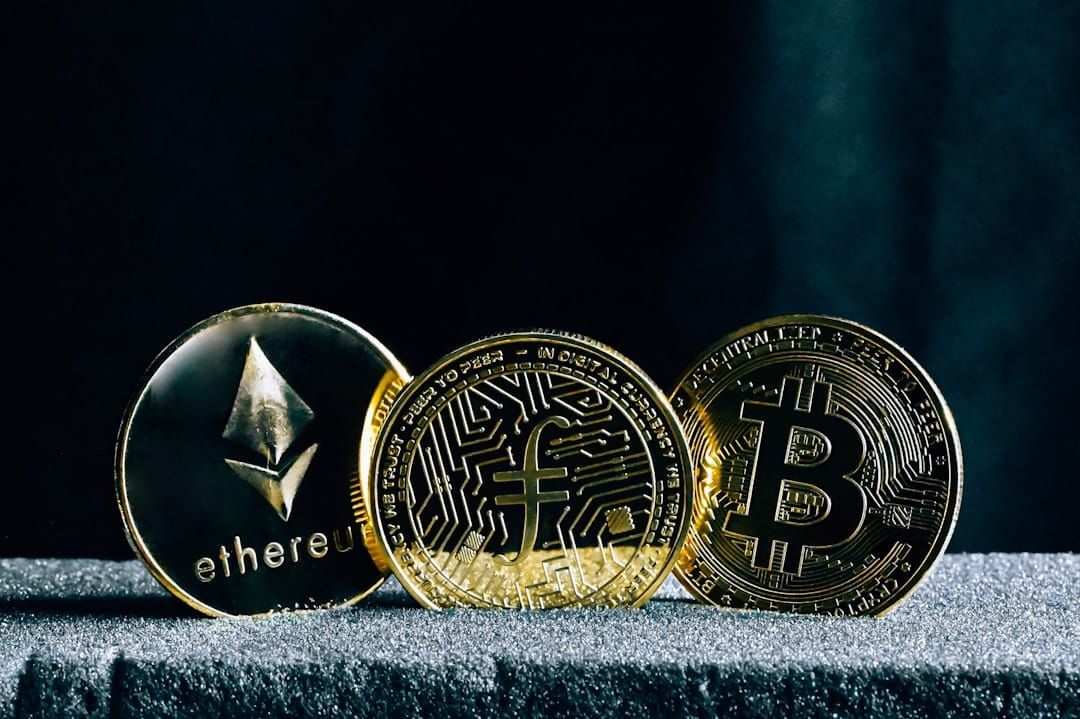
Imagine trying to pay for a coffee using a check that has to be cleared by a central bank before the barista hands you your cup. That's roughly what transacting on Ethereum mainnet feels like during peak congestion — slow, expensive, and frustrating. In early 2024, Ethereum hit 2 million daily transactions, according to Starknet's research, and fees on the base layer were routinely pushing $20–$50 per swap. Ethereum Layer-2 networks are secondary blockchains that process transactions faster and cheaper than mainnet, then periodically settle batches back to Ethereum for security. They were built to fix exactly that problem — and they're now the primary reason ethereum layer 2 networks explained is one of the most searched phrases in crypto education.
But there's a twist that most beginner guides miss: Ethereum's Layer-2 ecosystem didn't just make ETH cheaper to use. It quietly became the infrastructure that lets Bitcoin — the most valuable and most siloed asset in crypto — participate in decentralized finance (DeFi) for the first time at scale. This guide explains how all of it works, from first principles, with no assumed knowledge required.
Key Takeaways:Ethereum Layer-2 networks process transactions off-chain and batch-settle them on mainnet, reducing fees by up to 95% compared to Ethereum's base layer, according to 21Shares research (2026).There are now 100+ Layer-2 networks as of 2026, with two main technical architectures: Optimistic Rollups (Arbitrum, Optimism, Base) and ZK Rollups (zkSync Era, Starknet).Bitcoin cannot natively run smart contracts, so BTC must be bridged to Ethereum L2s to participate in DeFi — but most bridges rely on custodians, creating counterparty risk.Trustless alternatives like TeleBTC from TeleportDAO use SPV light client proofs to verify Bitcoin transactions on-chain, removing the need for custodians or multi-sig committees.Token swap fees on leading L2s range from $0.07 (zkSync Era) to $0.57 (Starknet), compared to $20–$50+ on Ethereum mainnet during high congestion.
Table of Contents
- What Is a Layer-2 Network? The Analogy You Need
- How Layer-2 Networks Actually Work: 3 Core Mechanisms
- 4 Top Ethereum L2s Compared: Fees, Speed, and Trade-Offs
- Why Bitcoin Can't Do DeFi Alone: The Core Problem
- How a Bitcoin Bridge to Ethereum Layer-2 Works
- 3 Ways BTC Enters Ethereum DeFi — and Their Trust Trade-Offs
- 5 Practical Takeaways for New Users
- Frequently Asked Questions
What Is a Layer-2 Network? The Analogy You Need
Think of Ethereum's main blockchain — called Layer 1 or "mainnet" — as a single-lane highway running through a city. Every car (transaction) has to drive on that same road. When traffic is light, it's fine. When everyone's rushing to get somewhere at once, you're stuck in gridlock and paying a premium just to merge.
A Layer-2 network is like building a network of express lanes alongside that highway. Transactions happen on these faster side roads and are only periodically merged back onto the main highway in large, efficient batches. You get the speed and low cost of the side road, but you're still anchored to the security of the main highway.
Layer-2 networks don't replace Ethereum. They borrow its security while handling the actual transaction processing elsewhere. This is fundamentally different from a completely separate blockchain, which has no connection to Ethereum's security at all.
By 2026, the L2 ecosystem has grown to over 100 networks, according to 21Shares — everything from general-purpose chains like Arbitrum to niche platforms built specifically for gaming (Immutable) or DeFi trading (Unichain).
How Layer-2 Networks Actually Work: 3 Core Mechanisms
Under the hood, all Ethereum L2s follow the same basic playbook, but they differ in how they prove their work back to mainnet. Here are the three concepts every beginner needs to understand.
1. Off-Chain Processing
When you swap tokens on an L2 like Arbitrum, that transaction is processed on Arbitrum's own network — not on Ethereum mainnet. This is why it's fast and cheap. The Ethereum mainnet doesn't see every individual trade; it only hears about the final summary.
2. Batch Settlement
Periodically, the L2 bundles hundreds or thousands of transactions together and submits a compressed summary to Ethereum mainnet. This is called "settling" on L1. Because the cost of posting one batch is shared across all those transactions, each individual transaction pays only a fraction of the mainnet gas fee.
Unichain, for example, achieves a 95% gas fee reduction using this model, per 21Shares' 2026 analysis.
3. Fraud Proofs vs. Validity Proofs
Optimistic Rollups (Arbitrum, Optimism, Base) assume all submitted transactions are valid unless someone challenges them within a dispute window — typically 7 days. If fraud is detected, a "fraud proof" is submitted and the invalid batch is rejected.
Zero-Knowledge (ZK) Rollups (zkSync Era, Starknet) take the opposite approach: every batch comes with a cryptographic proof — a mathematical guarantee — that the transactions are valid before they're posted to mainnet. This is more computationally intensive to generate, but it removes the waiting period and provides stronger security guarantees by default, as explained in Ethereum's official L2 documentation.
For beginners: ZK rollups finalize faster and more securely, but optimistic rollups have larger ecosystems today because the technology is more mature.
4 Top Ethereum L2s Compared: Fees, Speed, and Trade-Offs
Choosing an L2 isn't just about fees — it's about the ecosystem of apps available and how much you trust the security model. Here's a direct comparison of the four market leaders based on real transaction cost data from Coin Bureau's L2 analysis:
| L2 Network | Type | ETH Transfer Fee | Token Swap Fee | Best For |
|---|---|---|---|---|
| Arbitrum One | Optimistic Rollup | ~$0.09 | ~$0.27 | DeFi power users; largest ecosystem |
| Optimism | Optimistic Rollup | ~$0.09 | ~$0.18 | Governance-focused; Superchain foundation |
| Base | Optimistic Rollup (OP Stack) | ~$0.09 | ~$0.20 | Beginners; Coinbase-backed; broad dApp access |
| zkSync Era | ZK Rollup | ~$0.07 | ~$0.15 | Lower fees; stronger finality guarantees |
| Starknet | ZK Rollup (Cairo VM) | ~$0.19 | ~$0.57 | Advanced developers; unique architecture |
A word on Base: Coinbase's L2 has become the entry point for millions of new users, hosting major DeFi protocols including Aave V3, Uniswap, Curve, and Aerodrome Finance. For anyone new to crypto who already has a Coinbase account, Base is often the lowest-friction starting point.
One important caveat: Vitalik Buterin himself noted in 2026 that the original "rollup-centric" vision for Ethereum is evolving, as Ethereum's own base layer has improved faster than expected. The L2 landscape is not static — but for the next several years, these networks are where the majority of DeFi activity lives.
Why Bitcoin Can't Do DeFi Alone: The Core Problem
Bitcoin is the most valuable cryptocurrency in the world, with a market cap that dwarfs every other digital asset. Yet it can't natively participate in DeFi.
Bitcoin was deliberately designed to do one thing extremely well: store and transfer value securely. Its scripting language is intentionally limited — it can't run the kind of complex, programmable logic (called smart contracts) that DeFi applications require. You can't build a lending protocol or automated market maker on Bitcoin's base layer the way you can on Ethereum.
This creates a paradox. The asset with the most value and the broadest trust is locked out of the fastest-growing financial ecosystem in crypto.
The solution the industry landed on: don't change Bitcoin. Instead, represent Bitcoin on networks that can run smart contracts — like Ethereum and its Layer-2 ecosystem. This is where bridges come in. Learn more about how Bitcoin moves across chains in our guide on how to safely bridge Bitcoin to Ethereum.
Bitcoin does have its own L2 projects: the Lightning Network handles fast micropayments, while Stacks, Rootstock, and Citrea enable smart contracts that settle on Bitcoin. But none of these natively connects Bitcoin's liquidity to the vast DeFi ecosystem already running on Ethereum L2s.
How a Bitcoin Bridge to Ethereum Layer-2 Works
A Bitcoin bridge is a protocol that takes real BTC locked on Bitcoin's blockchain and issues a corresponding token on another network — say, Arbitrum or Base — that represents your BTC and can be used in DeFi applications. When you're done, you burn the token and receive your original BTC back.
The critical question — the one most beginner guides skip — is: who or what is holding your actual Bitcoin?
That answer determines how much risk you're taking. There are fundamentally three models:
- Custodial bridges: A company or DAO holds your BTC. You trust them not to get hacked, go bankrupt, or run off with the funds. WBTC (Wrapped Bitcoin) works this way — it's the most widely used wrapped BTC, but it requires trusting BitGo as custodian.
- Multi-sig / threshold signature bridges: A committee of signers collectively controls the BTC. tBTC uses this model. Better than a single custodian, but the committee is still a point of failure if enough members collude or are compromised.
- Trustless / light client bridges: The receiving chain directly verifies that a Bitcoin transaction happened using cryptographic proofs — no custodian needed. TeleBTC, TeleportDAO's wrapped Bitcoin token, is secured by SPV (Simplified Payment Verification) light client proofs rather than any human intermediary.
In practice, most BTC in DeFi today flows through custodial or semi-custodial routes because they were built first and have deeper liquidity. But the trust trade-offs are real, and understanding them is essential before you bridge any meaningful amount.
3 Ways BTC Enters Ethereum DeFi — and Their Trust Trade-Offs
Here's how the three main wrapped BTC solutions compare across the dimensions that matter most for someone new to crypto:
| Solution | Security Model | Custodian Required? | L2 Support | Trust Level |
|---|---|---|---|---|
| WBTC | Centralized custodian (BitGo) | Yes | Arbitrum, Optimism, Base, Polygon | Low — single point of failure |
| tBTC | Threshold signature committee | Partial (committee) | Arbitrum, Optimism, Base | Medium — committee-dependent |
| cbBTC | Coinbase custodian | Yes | Base, Ethereum | Low — centralized issuer |
| TeleBTC (TeleportDAO) | SPV light client proofs (on-chain verification) | No | Ethereum, Arbitrum, Base, Polygon, BSC, Optimism, Solana | High — trustless, no intermediary |
TeleBTC takes a fundamentally different approach: instead of trusting a custodian to hold the BTC, the protocol verifies Bitcoin transactions directly on-chain using SPV proofs — the same lightweight verification method Bitcoin itself uses. This means the wrapped token's backing can be cryptographically proven, not just promised. For users who care about self-sovereignty, that distinction matters enormously.
No solution is perfect. TeleBTC and similar trustless models are more technically complex and may have lower liquidity than WBTC today. WBTC's dominance is largely a liquidity network effect, not a reflection of its superior security. As the ecosystem matures, trustless models are likely to gain ground — especially after examining how institutions handle settlement and the importance of eliminating counterparty risk.
5 Practical Takeaways for New Users
- Start on Base or Arbitrum. Both have large ecosystems, low fees (under $0.30 per swap), and the most beginner-friendly on-ramps. Base is particularly well-suited if you're already using Coinbase.
- Understand what you're bridging to. When you move BTC into DeFi, you're creating a wrapped token. Know who controls the underlying BTC. Custodial bridges like WBTC are convenient but carry counterparty risk.
- Fees on L2s are cheap — but bridging back to mainnet can be expensive. Moving funds from L2 back to Ethereum mainnet still requires an L1 settlement transaction, which is subject to mainnet gas fees. Factor this in if you're moving small amounts.
- ZK rollups finalize faster than optimistic rollups, but optimistic rollups (Arbitrum, Optimism, Base) have larger app ecosystems today. For most beginners, ecosystem size matters more than finality speed.
- For trustless BTC bridging, compare options carefully. If you want to use BTC in DeFi without relying on a custodian, protocols that verify Bitcoin transactions using on-chain proofs are available across Ethereum, Base, Arbitrum, Polygon, and more at app.teleswap.xyz.
Frequently Asked Questions
What is an Ethereum Layer-2 network in simple terms?
An Ethereum Layer-2 network is a secondary blockchain that processes transactions faster and cheaper than Ethereum mainnet, then periodically reports a summary back to mainnet for security. Think of it as an express lane running alongside the main Ethereum highway — you get the speed and low cost of the side road, but your transactions are still anchored to Ethereum's security through periodic settlement.
How are Layer-2 networks different from sidechains?
Layer-2 networks inherit their security from Ethereum mainnet, while sidechains run independently and do not. A sidechain like an older version of Polygon has its own validators and consensus mechanism — if something goes wrong there, Ethereum mainnet can't help you. True L2s (rollups) post cryptographic proofs or data to Ethereum, meaning Ethereum's validators ultimately backstop their security. This is a critical distinction that even experienced crypto users sometimes get wrong.
Why can't Bitcoin do DeFi natively?
Bitcoin's scripting language is intentionally limited and cannot run the complex smart contracts that DeFi applications require. Bitcoin was designed to be a secure store and transfer of value — not a programmable platform. To access DeFi, BTC must be represented on a smart-contract-capable network like Ethereum or its L2s via a bridging protocol that issues a wrapped token backed by real BTC.
What is the difference between WBTC, tBTC, and TeleBTC?
All three are wrapped Bitcoin tokens, but they differ fundamentally in who controls the underlying BTC. WBTC relies on BitGo as a centralized custodian. tBTC uses a threshold signature committee — a group of signers who collectively control the funds. TeleBTC, built by TeleportDAO, uses SPV light client proofs to verify Bitcoin transactions directly on-chain, eliminating the need for any custodian or committee. The trade-off is that trustless models like TeleBTC are technically more complex and may have less liquidity than WBTC today.
Which Ethereum L2 has the lowest fees?
zkSync Era currently offers the lowest token swap fees among major Ethereum L2s, at approximately $0.07–$0.15 per transaction. Arbitrum and Optimism are close behind at $0.18–$0.27 for swaps. Starknet's fees are higher at $0.19–$0.57 per transaction despite its ZK architecture, due to the computational overhead of generating Cairo VM proofs. Fee levels can change with network upgrades, so always check current rates before transacting.
Is it safe to bridge Bitcoin to an Ethereum Layer-2?
Bridging BTC to an Ethereum L2 carries real risks, primarily related to the bridge's security model rather than the L2 itself. Custodial bridges like WBTC introduce counterparty risk — if the custodian is hacked or fails, your BTC could be at risk. Multi-sig bridges reduce but don't eliminate this. Trustless bridges that use on-chain verification (like SPV-based protocols) remove custodian risk but introduce smart contract risk. Always use audited protocols and start with small amounts to test the flow.
What is layer 2 scaling and why does it matter for Bitcoin DeFi?
Layer-2 scaling refers to the technique of processing transactions off the main blockchain to increase throughput and reduce costs, then settling the final state back on the base chain. For Bitcoin DeFi specifically, it matters in two ways: Ethereum's L2 ecosystem provides the cheap, fast infrastructure where wrapped BTC (like TeleBTC or WBTC) can be actively used in lending, trading, and yield protocols. Meanwhile, Bitcoin's own L2s (Lightning, Stacks, Rootstock) are beginning to enable DeFi directly on the Bitcoin settlement layer — though they remain early-stage compared to Ethereum's ecosystem.
The Bottom Line
Ethereum Layer-2 networks solved a real problem: they made decentralized finance usable for ordinary people by cutting fees from $50 to pennies. But their less-discussed achievement is that they created the infrastructure for Bitcoin — the world's most trusted store of value — to finally participate in DeFi at scale.
The key question for any BTC holder considering this path isn't which L2 to use. It's: how much do you trust the bridge? Custodial solutions offer convenience and liquidity. Trustless protocols like Teleswap offer cryptographic guarantees. Understanding that trade-off is the single most important thing a new user can learn before moving funds across chains.
Ready to explore trustless Bitcoin bridging and layer 2 scaling? Start with our guide on how to swap Bitcoin for Ethereum, or explore more beginner guides at academy.teleswap.xyz.