How to Swap Bitcoin for Ethereum: Complete Guide 2026

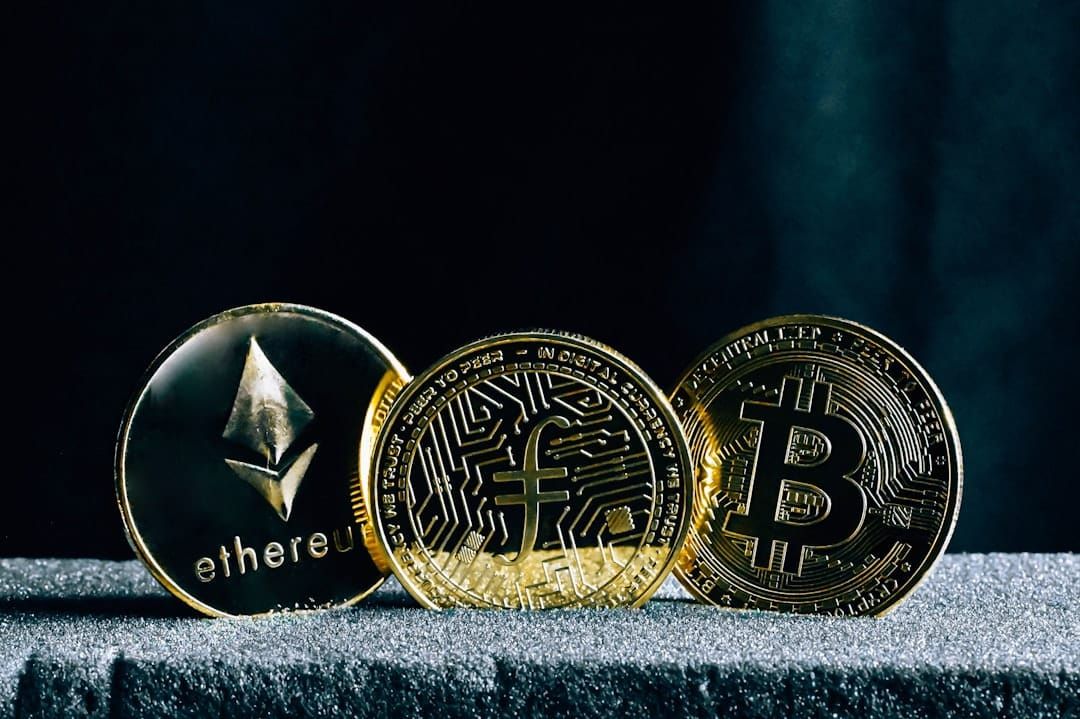
Want to swap your Bitcoin for Ethereum but don't know where to start? You're not alone. With BTC trading at approximately 38 ETH as of June 2026, millions of crypto users are looking to diversify between these two leading cryptocurrencies. But here's the catch: Bitcoin and Ethereum exist on completely separate blockchains, making direct transfers impossible. To swap BTC for ETH, you need an intermediary service like a centralized exchange, decentralized exchange, aggregator, or trustless bridge to convert between the two incompatible blockchains.
Think of it like trying to send a letter from the United States to France — you need an intermediary postal service to bridge the gap. The same principle applies to crypto swaps.
Key Takeaways:Direct BTC-to-ETH transfers are impossible since Bitcoin and Ethereum operate on separate blockchains with incompatible protocols, requiring intermediary services for all swaps.As of June 2026, 1 BTC equals approximately 38.17 ETH with average daily volatility of ±0.6%, making swap timing strategies important for maximizing received value.Five primary methods exist to swap BTC for ETH: centralized exchanges (highest liquidity, requires KYC), non-custodial aggregators (no KYC, competitive rates), decentralized exchanges (truly trustless via WBTC), privacy platforms (maximum anonymity), and trustless bridges like Teleswap (cryptographic verification without custodians).Total swap costs include source-chain fees, platform/bridge fees (0.1-1%), destination-chain gas (Ethereum), and hidden MEV costs that collectively can reduce final ETH received by 0.5-2% depending on method chosen.Security best practices include verifying blockchain networks, comparing quotes from 3+ platforms, testing with small amounts first, and maintaining detailed records for tax compliance in most jurisdictions.
Table of Contents
- Why Can't BTC and ETH Transfer Directly?
- 5 Methods to Swap BTC for ETH
- Cost Comparison Analysis
- Step-by-Step Swap Walkthrough
- Security Checklist Before Swapping
- Timing Your Swap for Best Rates
- Common Mistakes to Avoid
- Frequently Asked Questions
Why Can't BTC and ETH Transfer Directly?
Before diving into swap methods, let's understand why you can't simply send Bitcoin to an Ethereum address. Bitcoin and Ethereum are fundamentally incompatible due to different cryptographic protocols, address formats, and consensus mechanisms.
Bitcoin operates on the Bitcoin blockchain using SHA-256 proof-of-work consensus and UTXO (Unspent Transaction Output) accounting. Ethereum runs on its own blockchain using proof-of-stake consensus and account-based transactions. These fundamental differences make direct value transfers impossible.
According to Swapzone's technical documentation, direct wallet-to-wallet transfers between Bitcoin and Ethereum networks are impossible due to different cryptographic signatures, address formats, and consensus mechanisms. This is where intermediary solutions come in — services that can "translate" between these blockchain languages.
5 Methods to Swap BTC for ETH
Let's break down the five main approaches to swapping Bitcoin for Ethereum, each with distinct trade-offs:
1. Centralized Exchanges (CEX)
How it works: Deposit Bitcoin, trade for Ethereum, withdraw to your wallet.
Popular platforms: Binance, Coinbase, Kraken
Binance offers three conversion modes as of 2026: Instant Mode (converts at current market rate with live quotes valid for seconds), Limit Mode (set target prices with 30-day expiration), and Recurring Mode (automate purchases daily/weekly/monthly with allocation splits).
Pros: High liquidity, competitive rates, advanced order types
Cons: KYC required, custodial risk, potential account freezing
2. Non-Custodial Aggregators
How it works: Aggregates rates from multiple exchanges, you send to their address, they deliver ETH to your wallet.
Popular platforms: Swapzone, ChangeNOW
Based on May 2026 user reviews, Swapzone users report fast service with no KYC requirements. The process involves entering your BTC amount, selecting from real-time partner exchange rates, and providing your ETH address for direct delivery. For deeper comparison of swap options, see our guide on best DEX for cross-chain swaps in 2026.
Pros: No KYC, competitive aggregated rates, simple UX
Cons: Still involves counterparty trust during conversion
3. Decentralized Exchanges (DEX)
How it works: Swap WBTC (Wrapped Bitcoin) for ETH on automated market makers.
Popular platforms: Uniswap, SushiSwap, PancakeSwap
DEXs use liquidity pools instead of order books. You'll need to first convert your Bitcoin to WBTC (an ERC-20 token representing Bitcoin on Ethereum), then swap WBTC for ETH. According to Godex analysis, major DEXs support 400+ cryptocurrency pairs with no centralized control. To understand wrapped token mechanics more deeply, read our guide on what is wrapped Bitcoin (wBTC).
Pros: Truly decentralized, no KYC, retain custody throughout
Cons: Requires WBTC wrapping step, Ethereum gas fees, potential slippage
4. Privacy-First Platforms
How it works: Specialized services emphasizing anonymity and minimal data collection.
Popular platforms: SideShift, Tornado-style mixers
SideShift uses advanced anonymity techniques to minimize transaction linkability while maintaining a streamlined user experience focused on simplicity, as noted by privacy-focused exchange analysis.
Pros: Maximum privacy, no registration, transaction unlinkability
Cons: Limited liquidity, potentially higher fees, regulatory risks
5. Trustless Bridges
How it works: Cryptographic proofs verify Bitcoin transactions on Ethereum without custodians.
Popular platforms: Teleswap, tBTC, RenBridge
Teleswap is a non-custodial Bitcoin bridge using SPV (Simplified Payment Verification) light client proofs to verify Bitcoin transactions directly on-chain. Unlike WBTC (which requires BitGo as a custodian) or traditional bridges (which use multi-signature schemes), Teleswap inherits Bitcoin's security model directly through cryptographic verification. Learn more about comparing bridge options in our article on Symbiosis Bridge vs Teleswap cross-chain DEX.
Pros: No custodial risk, trustless verification, supports multiple chains
Cons: More complex UX, newer technology, limited liquidity
| Method | Trust Required | KYC | Liquidity | Fees | Speed |
|---|---|---|---|---|---|
| Centralized Exchange | High | Yes | Highest | Low-Medium | Fast |
| Aggregator | Medium | No | High | Medium | Fast |
| DEX | Low | No | Medium | High | Medium |
| Privacy Platform | Medium | No | Low | High | Medium |
| Trustless Bridge | Minimal | No | Growing | Medium | Medium |
Cost Comparison Analysis
Cross-chain swaps involve multiple cost layers that aren't always transparent upfront. Here's the complete breakdown:
Fee Components
1. Bitcoin Network Fees
Current average: $2-15 depending on network congestion
2. Exchange/Platform Fees
- Centralized exchanges: 0.1-0.25% trading fees
- Aggregators: 0.25-1% service fees
- DEX: 0.3% swap fee + gas costs
- Bridges: 0.1-0.5% bridge fees
3. Ethereum Gas Fees
Receiving ETH: $5-50 depending on network activity
4. Hidden Costs
According to FoxWallet's 2026 analysis, Maximal Extractable Value (MEV) represents a hidden cost from transaction ordering that can affect your final execution price by 0.1-2%.
Real-World Cost Example
Let's calculate the total cost to swap 1 BTC for ETH using different methods (assuming 1 BTC = 38 ETH):
| Method | Platform Fee | Network Fees | Hidden Costs | Total Cost | ETH Received |
|---|---|---|---|---|---|
| Binance | $75 (0.1%) | $10 | $0 | $85 | 37.89 ETH |
| Swapzone | $375 (0.5%) | $15 | $75 (MEV) | $465 | 37.81 ETH |
| Uniswap | $225 (0.3%) | $35 | $150 (MEV) | $410 | 37.83 ETH |
| Teleswap | $150 (0.2%) | $20 | $75 (MEV) | $245 | 37.87 ETH |
*Prices calculated using $75,000 BTC price for illustration
Step-by-Step Swap Walkthrough
Let's walk through a swap using a non-custodial aggregator (most beginner-friendly approach):
Using Swapzone (No KYC Required)
Step 1: Calculate Your Swap
- Visit Swapzone.io
- Select BTC as source currency, ETH as destination
- Enter the amount of Bitcoin you want to swap
- Review aggregated rates from partner exchanges
Step 2: Choose Your Rate
- Compare offers by rate, speed, and partner reputation
- Note that higher rates often come from exchanges with longer processing times
- Check the "estimated time" for each offer
Step 3: Provide Details
- Enter your Ethereum wallet address (double-check this!)
- Some platforms ask for a refund address — use your Bitcoin wallet
- Review the exchange terms and minimum/maximum limits
Step 4: Send Bitcoin
- Copy the provided Bitcoin deposit address
- Send your Bitcoin from your wallet to this address
- Include the exact amount specified (don't round up or down)
- Use appropriate transaction fees for timely confirmation
Step 5: Wait for Processing
- Bitcoin transactions need 1-3 confirmations typically
- Processing time varies: 10 minutes to 2 hours depending on the partner exchange
- Track progress using the provided transaction ID
Step 6: Receive Ethereum
- ETH will arrive directly in your provided wallet address
- No additional action needed on your part
- Save transaction details for tax records
Pro Tips for Smooth Swaps
- Start small: Test with a smaller amount first
- Check twice: Wallet addresses are irreversible
- Time it right: Monitor both Bitcoin and Ethereum network congestion
- Keep records: Save all transaction IDs and timestamps
Security Checklist Before Swapping
Based on FoxWallet's comprehensive security framework, follow this 10-point checklist before any swap:
Pre-Swap Verification
- Confirm blockchain networks: Verify you're swapping BTC (Bitcoin network) for ETH (Ethereum network)
- Check liquidity depth: Ensure sufficient trading pairs are available for your amount
- Compare expected outputs: Get quotes from 3+ platforms before proceeding
- Review all fees: Calculate total cost including network fees and slippage
- Set slippage tolerance: Typically 1-3% for volatile assets
- Verify minimum received: Check the minimum ETH amount you'll accept
- Assess price impact: Large trades can significantly move market prices
- Research bridge reputation: For cross-chain swaps, verify bridge security history
- Read approval requests: Understand what permissions you're granting
- Test small amounts: Always test with smaller values first
Red Flags to Avoid
- Unusually high rates: If it seems too good to be true, it probably is
- Unknown bridges: Stick to well-audited, established protocols
- Fake DEX websites: Always verify URLs and use bookmarks
- Suspicious smart contracts: Check contract addresses on blockchain explorers
- Pressure tactics: Legitimate services don't rush you into decisions
Timing Your Swap for Best Rates
The BTC/ETH exchange rate fluctuates constantly. As of June 2026, CoinGecko data shows the rate has ranged from 37.33 to 38.35 ETH per BTC over just seven days, with average daily volatility of ±0.6%.
Rate Volatility Analysis (June 9-15, 2026)
| Date | 1 BTC = ETH | 24hr Change | % Change |
|---|---|---|---|
| June 15 | 38.168 | -0.333 | -0.9% |
| June 14 | 38.354 | +0.179 | +0.5% |
| June 13 | 38.175 | +0.173 | +0.5% |
| June 12 | 38.002 | +0.081 | +0.2% |
| June 11 | 37.921 | +0.301 | +0.8% |
Timing Strategies
Dollar-Cost Averaging (DCA)
Instead of swapping all at once, break your swap into smaller chunks over days or weeks. This reduces timing risk but increases transaction costs.
Limit Orders
Platforms like Binance allow you to set target rates. Your order executes automatically when the market hits your price, but expires after 30 days if not filled.
Market Analysis
Monitor both Bitcoin and Ethereum fundamentals. Major updates, regulatory news, or institutional adoption can create short-term price movements affecting the swap ratio.
Network Congestion Monitoring
High gas fees on Ethereum can eat into your swap value. Tools like GasNow or EthGasStation help you time swaps during lower congestion periods.
Common Mistakes to Avoid
1. Wrong Address Format
Bitcoin addresses start with 1, 3, or bc1. Ethereum addresses start with 0x. Sending to the wrong format results in permanent loss.
2. Ignoring Minimum Amounts
Most platforms have minimum swap amounts. Sending less results in stuck transactions or fees eating your entire swap.
3. Not Accounting for Confirmations
Bitcoin transactions need network confirmations. During high congestion, this can take hours, affecting your final exchange rate.
4. Forgetting About Taxes
Crypto-to-crypto swaps are taxable events in most jurisdictions. Keep detailed records of amounts, timestamps, and market values.
5. Rushing During Volatility
High volatility periods tempt quick decisions. Take time to compare rates and double-check addresses even when markets are moving fast.
6. Not Testing Small Amounts
Always test with smaller amounts first, especially when using new platforms or methods.
Ready to make your first BTC-to-ETH swap? Whether you choose a centralized exchange for maximum liquidity, a trustless bridge for security, or an aggregator for convenience, the key is understanding the trade-offs and following proper security practices. Start small, verify everything twice, and keep detailed records for tax purposes.
For trustless Bitcoin-to-Ethereum swaps without custodial risk, explore Teleswap's SPV-verified bridge technology — where cryptographic proofs replace trust assumptions.
Frequently Asked Questions
Can I send Bitcoin directly to an Ethereum address?
No, you cannot send Bitcoin directly to an Ethereum address. Bitcoin and Ethereum operate on completely separate blockchains with incompatible protocols, addresses, and consensus mechanisms. All BTC-to-ETH transfers require an intermediary service like an exchange, bridge, or aggregator to facilitate the conversion.
What's the current exchange rate between BTC and ETH?
As of June 2026, 1 BTC equals approximately 38.17 ETH. However, this rate fluctuates daily. The rate has ranged from 37.33 to 38.35 ETH per BTC over the past week, with average daily volatility of ±0.6%. Always check real-time rates before swapping as crypto prices change constantly.
Which method is cheapest for swapping BTC to ETH?
Centralized exchanges like Binance typically offer the lowest fees at 0.1-0.25% plus minimal network costs, making them the cheapest option overall. However, they require KYC verification. For no-KYC options, trustless bridges like Teleswap often provide competitive rates around 0.2% while eliminating custodial risk through cryptographic verification.
How long does a BTC to ETH swap take?
Swap times vary by method: centralized exchanges process swaps in 10-30 minutes, aggregators take 30 minutes to 2 hours, DEX swaps complete in 5-15 minutes, and trustless bridges require 1-3 hours for full verification. Bitcoin network confirmation time (10-60 minutes) affects all methods.
Do I need KYC verification to swap Bitcoin for Ethereum?
KYC requirements depend on your chosen method. Centralized exchanges like Binance require full KYC verification. However, aggregators like Swapzone, DEXs like Uniswap, privacy platforms like SideShift, and trustless bridges like Teleswap allow swaps without any identity verification or registration.
What's the difference between WBTC and native Bitcoin?
WBTC (Wrapped Bitcoin) is an ERC-20 token on Ethereum backed 1:1 by Bitcoin held by BitGo as custodian. Unlike native Bitcoin, WBTC can be used in Ethereum DeFi applications but requires trusting a centralized custodian. Trustless alternatives like TeleBTC use cryptographic proofs instead of custodians for verification.
Are Bitcoin to Ethereum swaps taxable?
Yes, crypto-to-crypto swaps are taxable events in most countries including the US, UK, and EU. You must report the fair market value of both cryptocurrencies at the time of the swap as either capital gains or ordinary income, depending on your jurisdiction and holding period.