Are Decentralized Exchanges Safe? Reality Check for Beginners

A friend lost $12,000 on a "100% safe" decentralized exchange last month. Not to a hack—to a simple mistake with their wallet seed phrase. Meanwhile, another friend's funds sat secure on Coinbase through multiple market crashes. So which is actually safer: decentralized exchanges (DEXs) or traditional centralized exchanges (CEXs)? Decentralized exchange safety isn't black and white—it depends on your experience level, risk tolerance, and which specific threats matter most to you.
The answer isn't what most crypto enthusiasts want to hear.
Key Takeaways:DEXs eliminate centralized custody risks but introduce smart contract vulnerabilities—over $540 million was lost to smart contract bugs in recent periods.User error causes 88% of stolen amounts on non-custodial platforms, making private key management the biggest risk factor for DEX users.DEX trading costs are typically 30 basis points higher than CEXs due to wider bid-ask spreads and gas fees.Over 649 separate DEXs exist with $15.85 billion in combined liquidity, but most lack the regulatory oversight that protects CEX users.MEV attacks and transaction manipulation cost traders "hundreds of thousands" in losses on DEXs during 2026.
Table of Contents
- What Makes DEXs Different From Regular Exchanges?
- How DEXs Actually Protect Your Funds
- The Hidden Risks Most People Miss
- DEX vs CEX: The Real Safety Comparison
- Why Your Behavior Matters More Than the Platform
- How to Choose Based on Your Risk Tolerance
- Frequently Asked Questions
What Makes DEXs Different From Regular Exchanges?
Think of a traditional exchange like a bank. You deposit your money, they hold it in their vault, and when you want to trade, they handle everything internally. Coinbase, Binance, and Kraken work this way—they're custodial exchanges.
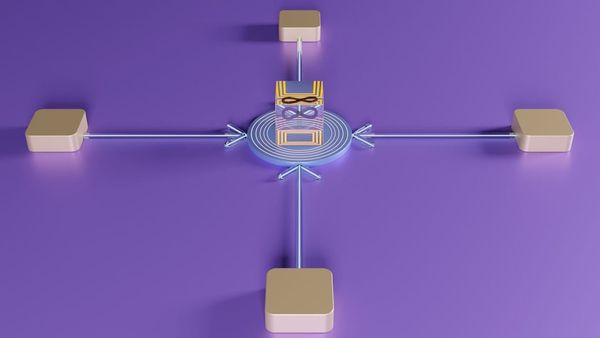
A decentralized exchange is more like a vending machine that never takes possession of your wallet. You keep your coins in your own wallet, connect it to the DEX when you want to trade, and the exchange automatically swaps your tokens using pre-programmed rules called smart contracts.
Here's what happens differently:
On a CEX: You send Bitcoin to Coinbase → Coinbase credits your account → You place a trade → Coinbase matches you with another trader → Coinbase updates both accounts internally.
On a DEX: You connect your wallet → You approve the DEX to access specific tokens → The smart contract automatically calculates the trade price → Your tokens are swapped directly from your wallet → The new tokens appear in your wallet.
This fundamental difference creates entirely different risk profiles. Over 649 separate DEXs now operate with this non-custodial model, handling $15.85 billion in combined liquidity. Understanding these differences is essential for evaluating true DEX decentralization and how validator architecture affects control.
How DEXs Actually Protect Your Funds
DEXs eliminate the single biggest risk in crypto: putting all your eggs in someone else's basket.
No Central Honeypot
When hackers target centralized exchanges, they're going after massive pools of user funds. The 2022 FTX collapse wiped out billions in user deposits overnight.
Single CEX breaches have yielded "billions of dollars in a single operation," making them attractive targets. DEXs can't be robbed this way because there's no central vault. Your funds stay in your wallet until the moment you trade them.
Transparent Operations
Every DEX transaction happens on a public blockchain. You can verify exactly what happened, when, and how much was involved.
Smart contracts are often open-source, meaning security researchers can audit the code for vulnerabilities. Compare this to centralized exchanges, where your trade might not even hit the blockchain—they could just update their internal database and handle the actual settlement later.
No KYC Requirements
DEXs don't require identity verification, offering privacy that many users value. This eliminates risks from data breaches that expose personal information, contrasting sharply with the regulatory requirements discussed in our guide on Bitcoin bridge compliance and legal considerations.
24/7 Automated Operation
Smart contracts don't take lunch breaks or freeze accounts during "maintenance." DEXs operate 24/7 through automated protocols, though this automation comes with its own risks.
The Hidden Risks Most People Miss
Here's where the "DEXs are always safer" narrative falls apart. The safety you gain from eliminating custodial risk gets offset by entirely new categories of danger.
Smart Contract Vulnerabilities
Smart contracts are code, and code has bugs. Over $540 million was lost to smart contract vulnerabilities in recent periods across DeFi platforms.
When a DEX smart contract has a flaw, there's often no "undo" button. The 2025 Balancer Protocol incident showed how interconnected vulnerabilities can rapidly propagate across platforms.
MEV and Transaction Manipulation
This is where things get technical, but stick with me. When you place a trade on a DEX, it doesn't execute immediately. Your transaction sits in a "waiting room" called the mempool, where bots can see it before it's confirmed.
These bots can then "front-run" your trade—placing their own orders first to profit from the price movement your large trade will cause. "Hundreds of thousands" were lost through MEV attacks on DEXs during 2026.
The User Error Problem
User error causes 88% of stolen amounts on non-custodial platforms. When you control your own keys, you're also responsible for not losing them, not getting phished, and not making expensive mistakes.
Common user errors include:
- Sending tokens to wrong addresses (permanent loss)
- Falling for phishing sites that drain wallets
- Losing seed phrases or private keys
- Approving malicious smart contracts
- Setting wrong slippage tolerance, leading to massive losses
Phishing attacks account for 48% of all exchange breaches, making social engineering the leading threat vector.
Higher Trading Costs
Safety aside, DEXs typically cost more to use. Bid-ask spreads on DEXs can be up to 30 basis points wider than CEXs for the same trading pairs. Add gas fees for blockchain transactions, and your costs add up quickly.
DEX vs CEX: The Real Safety Comparison
Let's break down the trade-offs with real data:
| Risk Factor | DEX Risk Level | CEX Risk Level | Winner |
|---|---|---|---|
| Centralized hack/exit scam | None | High (billions lost historically) | DEX |
| Smart contract bugs | High ($540M+ lost recently) | None | CEX |
| User error losses | Very High (88% of losses) | Low (customer support available) | CEX |
| Regulatory shutdown | Medium (unclear status) | Low (licensed operators) | CEX |
| Transaction manipulation | High (MEV attacks common) | Low (regulated order books) | CEX |
| Privacy breaches | Low (no KYC data stored) | High (personal data required) | DEX |
The reality? Neither is universally safer. It depends on your specific use case and risk tolerance.
When DEXs Are Safer
DEXs make sense if you:
- Have experience with wallet security and key management
- Value privacy over convenience
- Want to trade obscure tokens not available on CEXs
- Distrust centralized institutions fundamentally
- Only trade small amounts you can afford to lose to user error
When CEXs Are Safer
Centralized exchanges are often safer for:
- Beginners who might make costly mistakes
- Large traders who need deep liquidity
- Users who want customer support when things go wrong
- People trading frequently (lower costs matter)
- Anyone uncomfortable managing their own private keys
Why Your Behavior Matters More Than the Platform
Here's the uncomfortable truth: the biggest factor in your safety isn't which type of exchange you choose—it's how carefully you use it.
Consider these scenarios:
Scenario A: Sarah uses Coinbase with 2FA enabled, never shares her login details, and only accesses her account from trusted devices. She's been safely trading for three years.
Scenario B: Mike uses Uniswap (a popular DEX) but clicked a phishing link, approved a malicious contract, and lost his entire wallet in minutes.
The platform didn't determine the outcome—user behavior did.
Critical Safety Practices for DEX Users
If you choose DEXs, these practices are non-negotiable:
- Use a hardware wallet for significant amounts
- Double-check every contract address before approving transactions
- Set conservative slippage tolerance (usually 0.5-1%)
- Start with small amounts to test unfamiliar protocols
- Keep multiple backups of your seed phrase in secure locations
- Use reputable DEX aggregators that have been audited multiple times
For CEX Users
- Enable all available security features (2FA, withdrawal whitelists, etc.)
- Never leave large amounts on exchanges long-term
- Use strong, unique passwords and password managers
- Verify URLs carefully to avoid phishing sites
- Choose regulated exchanges with insurance coverage
How to Choose Based on Your Risk Tolerance
The "safest" approach depends entirely on your profile:
Conservative Approach: Hybrid Strategy
Use CEXs for regular trading and onboarding, DEXs for specific use cases like:
- Accessing tokens not available on CEXs
- Maintaining privacy for certain transactions
- Participating in DeFi yield farming (with money you can afford to lose)
Keep most funds in cold storage, not on either type of exchange. For Bitcoin-specific trading, trustless protocols like those described in our native Bitcoin swaps guide eliminate intermediary custody risks entirely.
Risk-Tolerant Approach: DEX-First
If you're comfortable with the technical requirements, use established DEXs like Uniswap, SushiSwap, or PancakeSwap. Consider DEX aggregators that find the best prices across multiple platforms.
For Bitcoin users specifically, protocols like Teleswap (a non-custodial Bitcoin bridge using SPV light client verification) enable trustless BTC-to-ERC20 swaps, eliminating the need for custodial wrapping services.
Beginner-Friendly Approach: Start Centralized
New users should typically begin with regulated CEXs like Coinbase, Kraken, or Gemini. Learn the basics of wallet management with small amounts before exploring DEXs.
The goal isn't to pick the "right" side in some philosophical debate—it's to match your tools to your capabilities and risk tolerance.
Frequently Asked Questions
Are DEXs actually safer than centralized exchanges?
Neither DEXs nor CEXs are universally safer—each has different risk profiles. DEXs eliminate custody risk but introduce smart contract vulnerabilities and increase user error risk. CEXs offer customer support and regulatory protection but create single points of failure. Your safety depends more on your behavior and experience level than the platform type.
What's the biggest risk when using a DEX?
User error accounts for 88% of losses on non-custodial platforms, making it the biggest DEX risk. Common mistakes include losing private keys, falling for phishing scams, sending tokens to wrong addresses, and approving malicious smart contracts. Smart contract bugs represent the second-largest risk category.
Can I lose money to bugs in DEX smart contracts?
Yes, smart contract vulnerabilities have caused over $540 million in losses across DeFi platforms recently. Unlike centralized exchanges where customer service might help recover funds, smart contract losses are typically permanent. This is why using audited, established DEXs and starting with small amounts is crucial.
Why do DEXs cost more to trade on than centralized exchanges?
DEX trading costs are typically 30 basis points higher due to wider bid-ask spreads and blockchain gas fees. Unlike CEXs that match orders internally, DEXs require on-chain transactions for every trade, and automated market makers often have less efficient pricing than traditional order books.
Do DEXs require KYC verification like centralized exchanges?
No, DEXs typically don't require identity verification or KYC compliance. You can trade by simply connecting a wallet, which offers privacy benefits but also means no customer support or regulatory protection if something goes wrong. This anonymity attracts users but eliminates traditional consumer safeguards.
What are MEV attacks and should I worry about them on DEXs?
MEV (Maximal Extractable Value) attacks involve bots reordering or front-running your transactions for profit. These attacks cost traders "hundreds of thousands" in losses during 2026 according to security reports. While not always devastating for small trades, MEV can significantly impact larger transactions on DEXs.
Can the government shut down a DEX?
Governments can target DEX interfaces and developers, but fully decentralized protocols are harder to shut down than centralized exchanges. However, regulatory uncertainty remains high—most jurisdictions haven't established clear DeFi regulations as of 2025-2026. This creates both freedom and legal ambiguity for users.
The question isn't whether decentralized exchanges are safe—it's whether they're safe for you, given your experience level and risk tolerance. Both DEXs and CEXs have legitimate use cases, and the safest crypto users often employ both strategically.
Ready to explore decentralized trading? Start small, prioritize education over speed, and remember that in crypto, the most dangerous phrase is "this can't go wrong."