Swap BTC No KYC: Anonymous Bitcoin Trading in 2026

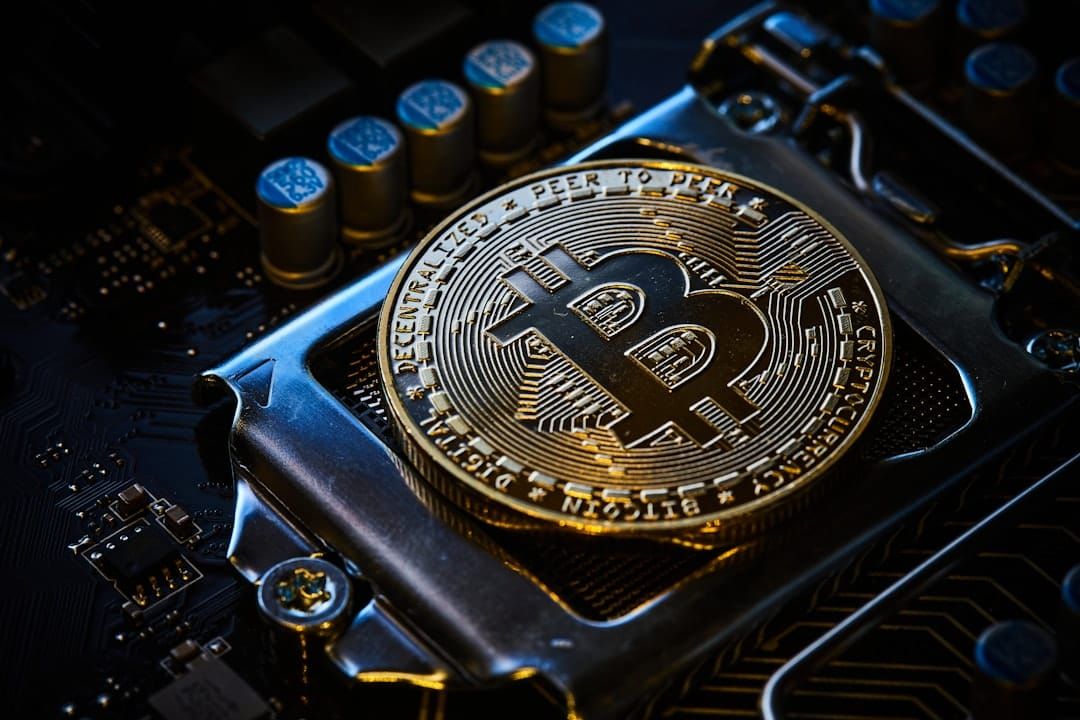
Imagine walking into a currency exchange at an airport, handing over dollars, and getting euros back — no passport, no forms, no record. That's the experience millions of Bitcoin holders are looking for when they want to swap BTC no KYC in 2026. No identity checks. No waiting for approval. No third party holding your coins while the paperwork clears.
But here's the honest truth: not every platform that claims to be "no KYC" actually delivers. Some trigger identity checks if your transaction looks unusual. Others are technically non-custodial but still log your IP and wallet addresses. And a few simply vanish with your funds.
This guide cuts through the noise. Whether you're new to crypto or just tired of handing over a passport every time you want to move assets, we'll walk you through what no-KYC Bitcoin swaps actually mean, which methods work in 2026, what the real risks are, and — critically — how to do it without giving up the one thing Bitcoin was designed to protect: your financial sovereignty.
Key Takeaways:KYC (Know Your Customer) is an identity-verification requirement imposed by centralized exchanges — non-custodial platforms and decentralized protocols don't require it by design.Not all "no-KYC" swaps are equally private: centralized instant-swap services skip ID checks but may still log IP addresses, while on-chain DEX swaps leave a permanent public record on the blockchain.Trustless bridges like Teleswap verify Bitcoin transactions using cryptographic SPV proofs — no custodian, no identity check, and no intermediary ever touches your BTC.According to TeleSwap network stats, the protocol has processed over $384 million across 392,270 transactions — proving real-world scale at the trustless end of the market.The biggest risk in no-KYC swaps isn't regulation — it's counterparty risk on platforms that claim to be non-custodial but aren't. Always verify before you send.
Table of Contents
- What Is KYC — and Why Do People Avoid It?
- How to Swap BTC No KYC: 5 Real Methods Compared
- Side-by-Side Comparison: No-KYC Bitcoin Swap Options in 2026
- The Trustless Crypto Bridge Option: How Teleswap Works
- Step-by-Step: Anonymous Bitcoin Swap Using Teleswap
- Real Risks of No-KYC Swaps (and How to Avoid Them)
- Frequently Asked Questions
- Conclusion
What Is KYC — and Why Do People Avoid It?
KYC stands for "Know Your Customer" — a legal requirement that financial institutions, including most centralized crypto exchanges, must follow in most countries to verify customer identity. When you sign up for Coinbase, Binance, or Kraken, they ask for your name, address, government-issued ID, and sometimes a selfie. That process is KYC.
The original intent was to prevent money laundering and terrorist financing. That's a legitimate goal. But in practice, KYC has a number of real downsides for ordinary Bitcoin users:
- Data breach risk: Your passport scan and home address now live on a corporate server. Exchanges have been hacked. That data gets sold.
- Financial surveillance: Every trade you make is permanently linked to your legal identity and, in many jurisdictions, reported to tax authorities.
- Access barriers: People in countries with unstable governments, restricted banking, or limited ID infrastructure often can't pass KYC at all.
- Speed and friction: KYC verification can take hours or days. For fast-moving markets, that's a real cost.
None of this means everyone trying to swap BTC without KYC has something to hide. Most don't. They simply want to use Bitcoin the way it was designed to work: as a permissionless, peer-to-peer financial system where you control your own money.
The key question is: what are your actual options, and how do they differ in terms of privacy, security, and ease of use?
How to Swap BTC No KYC: 5 Real Methods Compared
There isn't one single way to execute an anonymous bitcoin swap. There are five distinct models, each with different tradeoffs. Here's how they actually work — from the simplest to the most technically rigorous.
1. Centralized Instant-Swap Services (SimpleSwap, StealthEX, ChangeHero)
These platforms let you swap one cryptocurrency for another without creating an account. You enter your destination wallet address, send your coins, and receive the swapped asset. No ID required — in most cases.
The catch: these are still centralized businesses. They typically log your IP address, wallet addresses, and transaction history. Many have "conditional no-KYC" policies, meaning they'll ask for ID if their automated AML (anti-money laundering) system flags your transaction. According to Koinly's 2026 exchange review, ChangeHero may trigger verification for unusual transaction patterns despite its no-registration headline.
These services are fine for small, straightforward swaps. They are not truly anonymous by any technical definition.
2. Decentralized Exchanges (DEXs) — Uniswap, PancakeSwap
DEXs are smart-contract-based trading platforms that run on blockchains like Ethereum or BNB Chain. You connect your own wallet (MetaMask, Trust Wallet), approve a transaction, and the swap happens directly on-chain. No account, no KYC, no company in the middle.
Uniswap, the largest DEX, supports 900+ ERC-20 tokens on Ethereum mainnet plus Layer-2 networks like Arbitrum, Optimism, and Base. Fees run about 0.3% per swap, plus gas costs — which are minimal on Layer-2s but can reach $15–50 on Ethereum mainnet during congestion.
The important nuance: all DEX transactions are permanently public on-chain. Anyone can trace your wallet's history. The swap is non-custodial and KYC-free, but it's not private. You're also limited to tokens that exist on that specific chain — native Bitcoin (BTC) doesn't live on Ethereum.
3. Peer-to-Peer (P2P) Exchanges — Bisq, RoboSats
P2P platforms connect buyers and sellers directly, with cryptographic escrow to secure trades. Bisq runs as a desktop app over the Tor network and supports 30+ cryptocurrencies including Bitcoin fiat pairs. RoboSats uses the Bitcoin Lightning Network and lets you trade up to $1,400 per transaction using pseudonymous "robot" identities with no account required.
These are among the most private options available. But they come with tradeoffs: liquidity is thinner than centralized markets, trades can take longer to complete, and the user experience requires more technical comfort.
4. Atomic Swaps (Bitcoin ↔ Monero)
Atomic swaps are a cryptographic technique that lets two parties exchange different cryptocurrencies directly — without any intermediary, escrow service, or custodian. The trade either completes fully or reverts entirely; there's no scenario where one party receives funds and the other doesn't.
Tools like KYCNot.me catalog services like BasicSwap and eigenwallet (formerly UnstoppableSwap) that enable Bitcoin-to-Monero atomic swaps. Monero is a privacy-focused cryptocurrency, so this combination offers the highest level of on-chain privacy available. The downside: limited asset pairs, desktop-only software, and relatively low liquidity.
5. Trustless Cross-Chain Bridges — Teleswap
This is the most technically sophisticated option — and the one that addresses a gap the others don't: what if you want to swap native BTC into tokens on Ethereum, Base, Polygon, or other chains, without wrapping your Bitcoin through a custodian?
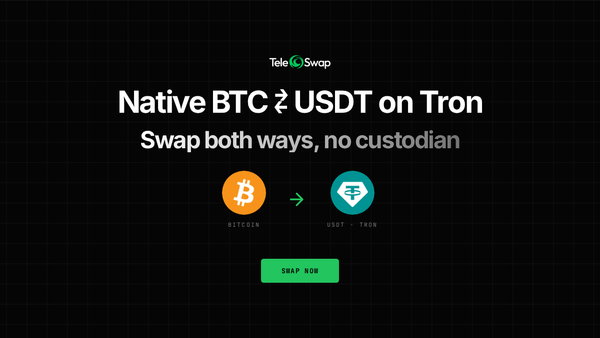
That's exactly what a non-custodial BTC exchange like Teleswap is built for. Rather than wrapping Bitcoin (which requires trusting a custodian like BitGo for WBTC), Teleswap uses SPV light client verification — the same cryptographic technique Bitcoin itself uses — to prove that a Bitcoin transaction happened on-chain. The smart contract on the destination chain reads that proof and releases tokens accordingly. No company holds your BTC at any point.
We'll walk through this in detail in the section below.
Side-by-Side Comparison: No-KYC Bitcoin Swap Options in 2026
Here's a direct comparison of the main options based on real data. "Privacy" here refers to whether the platform can link your identity to your transaction — not whether the blockchain record is public.
| Method / Platform | Custodial? | KYC Required? | Supports Native BTC? | Approx. Fee | Speed | Privacy Level |
|---|---|---|---|---|---|---|
| SimpleSwap / StealthEX | No (but centralized) | No (conditional) | Yes | ~0.5% | 5–30 min | Low (logs IP/wallet) |
| ChangeHero | No (but centralized) | No (AML triggers possible) | Yes | ~0.5% | ~5 min | Low |
| Uniswap (Ethereum / L2) | No | No | No (ERC-20 only) | 0.3% + gas | Seconds–minutes | Medium (public on-chain) |
| Bisq (P2P) | No | No | Yes | ~0.1–0.5% | Hours | High (Tor network) |
| RoboSats (Lightning P2P) | No | No | Yes (Lightning) | ~0.2–0.5% | Minutes | High (pseudonymous) |
| Atomic Swaps (BTC↔XMR) | No | No | Yes | Mining fees only | 30–60+ min | Very High |
| Teleswap (trustless bridge) | No | No | Yes | ~0.1–0.3% | ~10–20 min | High (SPV-verified, no custodian) |
The table makes one thing clear: the trade-off between convenience and privacy isn't as stark as it used to be. Teleswap in particular occupies a position that was technically impossible just a few years ago — trustless, non-custodial, and fast enough for practical use.
The Trustless Crypto Bridge Option: How Teleswap Works
A trustless bridge is a protocol where cryptographic verification, not human trust or corporate custody, ensures that your assets are correctly transferred across blockchains. Most people understand the difference between a bank and a DEX. What fewer people understand is the specific problem that's historically made it hard to swap BTC no KYC in a truly trustless way: Bitcoin doesn't run on Ethereum.
Bitcoin has its own blockchain. Ethereum has its own blockchain. They can't communicate natively. The usual workaround is "wrapping" — you send BTC to a custodian (like BitGo, which holds BTC backing for WBTC), and they mint an ERC-20 token representing your Bitcoin. You get WBTC on Ethereum. But now you've trusted a company with your Bitcoin. That's not trustless.
Teleswap, built by TeleportDAO, solves this differently. Instead of a custodian, it uses SPV light client verification — a cryptographic technique that allows the smart contract on Ethereum (or Base, Polygon, Arbitrum, BNB Chain, and other supported chains) to independently verify that a Bitcoin transaction actually happened on the Bitcoin blockchain. No company. No multi-sig committee. The math does the verification.
When you send BTC to Teleswap:
- Your Bitcoin transaction is broadcast on the Bitcoin network.
- Teleswap's protocol generates a cryptographic proof (an SPV proof) confirming the transaction is real and confirmed.
- That proof is submitted to the smart contract on your destination chain.
- The contract verifies the proof and releases the corresponding tokens directly to your wallet.
No one holds your BTC in the middle. No identity check is required at any step. The whole process takes roughly 10–20 minutes — or as little as ~10 minutes with Teleswap's Fast Swap feature, which settles after a single Bitcoin confirmation instead of two, according to the TeleSwap documentation.
This isn't a theoretical system. According to TeleSwap network stats, the protocol has processed over $384 million in volume across 392,270 transactions to date. In the last 30 days alone, $44.3 million moved through the protocol, averaging around $1.5 million per day. That's real money, real users, and real verification — happening without a single KYC form.
Teleswap currently supports 13 networks, and it's integrated into major aggregators and wallets including Rubic, Rango, MetaMask, and Trust Wallet — so you can access it directly or through tools you may already use.
Step-by-Step: Anonymous Bitcoin Swap Using Teleswap
Let's make this concrete. Say you hold native BTC and want to receive USDC on Polygon without going through a KYC exchange. Here's exactly how that works with Teleswap.
What you'll need before you start:
- A Bitcoin wallet (hardware wallet like Ledger or Trezor, or software like Electrum)
- A Web3 wallet on Polygon (MetaMask works fine)
- The BTC you want to swap
Step 1: Go to app.teleswap.xyz
Navigate to app.teleswap.xyz. No account creation. No email address. No KYC.
Step 2: Connect your destination wallet
Connect your MetaMask (or any supported Web3 wallet) to the app. This is where you'll receive your USDC on Polygon.
Step 3: Configure your swap
Select BTC as your source asset and USDC on Polygon as your destination. Enter the amount you want to send. The app will show you the estimated output, including fees.
Step 4: Get your deposit address
Teleswap generates a unique Bitcoin deposit address for this specific transaction. This address is tied to your swap request cryptographically — it's not reused across users.
Step 5: Send BTC from your wallet
From your Bitcoin wallet, send the exact amount to the deposit address. Use a fresh receiving address for any change outputs if privacy matters to you.
Step 6: Wait for confirmations
With Fast Swaps enabled, you'll receive your USDC on Polygon after approximately one Bitcoin confirmation — roughly 10 minutes. Standard swaps settle after two confirmations (~20 minutes).
Step 7: Receive your tokens
Your USDC arrives directly in your MetaMask wallet on Polygon. No withdrawal process. No waiting for a company to approve a transfer. No identity verification at any step.
If the swap fails for any reason (for example, if the market moved significantly during settlement and the minimum output couldn't be met), Teleswap's protocol automatically refunds your bridged BTC rather than leaving funds stuck — as detailed in the swap failures and refunds documentation.
Real Risks of No-KYC Swaps (and How to Avoid Them)
Anonymous Bitcoin swaps are not risk-free. Anyone who tells you otherwise is selling something. Here are the actual risks — and honest mitigations.
Risk 1: Platform custodial risk
The most common failure mode: a platform claims to be non-custodial but actually holds your funds during the swap. If it gets hacked or goes insolvent, your coins are gone. Mitigation: use protocols where smart contracts — not companies — hold any temporary escrow. Verify the code is open-source and audited.
Risk 2: Regulatory changes
The regulatory environment for no-KYC crypto services is shifting. Several jurisdictions have increased pressure on instant-swap services to implement AML checks. Platforms operating from less-regulated jurisdictions can change their policies suddenly. Mitigation: prefer on-chain, decentralized protocols over centralized businesses.
Risk 3: On-chain traceability
Every transaction on Ethereum, Bitcoin, and other public blockchains is permanently visible to anyone. "No KYC" doesn't mean "invisible." Blockchain analytics firms like Chainalysis can trace transaction graphs. If you use a wallet address previously linked to your identity (from a KYC exchange withdrawal, for example), that link persists. Mitigation: use fresh wallet addresses for sensitive transactions.
Risk 4: Smart contract vulnerabilities
DeFi protocols are code. Code can have bugs. Smart contract exploits have cost the industry billions of dollars. Mitigation: use protocols with public audit records, significant usage history, and a track record of handling edge cases (like failed swaps) gracefully.
Risk 5: Tax obligations don't disappear
This is important: swapping cryptocurrency is a taxable event in most jurisdictions, regardless of whether KYC was required. "No KYC" means the exchange didn't collect your identity — it doesn't mean your transaction is invisible to tax authorities, especially if funds eventually touch a KYC'd platform. Always consult a tax professional familiar with cryptocurrency in your jurisdiction.
Frequently Asked Questions
Is it legal to swap BTC no KYC?
In most jurisdictions, swapping cryptocurrency without KYC is legal for individuals, but the rules vary significantly by country and context. KYC requirements are typically imposed on businesses (exchanges, financial service providers), not on individuals making personal transactions. Using a non-custodial wallet or a decentralized protocol doesn't make you a money services business. That said, all crypto swaps are generally still taxable events, and some countries have introduced stricter rules. Always check the laws in your specific jurisdiction before proceeding.
What does "non-custodial" actually mean?
Non-custodial means you retain full control of your private keys — and therefore your funds — at all times. A custodial exchange (like Coinbase) holds your Bitcoin on your behalf, the same way a bank holds your dollars. If a custodial exchange gets hacked or freezes withdrawals, your funds are at risk. A non-custodial exchange or protocol never takes control of your coins; it only facilitates the swap through smart contracts or atomic mechanisms.
How is Teleswap different from WBTC or other wrapped Bitcoin?
WBTC requires trusting a centralized custodian (BitGo) to hold the real Bitcoin — Teleswap uses cryptographic SPV proofs to verify Bitcoin transactions without any custodian. When you use WBTC, a company holds your BTC and promises to give it back. With Teleswap, no company ever holds your Bitcoin; instead, a smart contract verifies your transaction cryptographically and releases tokens on the destination chain. This is the key distinction between wrapped Bitcoin that requires trust and a truly trustless crypto bridge.
How fast are no-KYC Bitcoin swaps?
Speed varies by method: centralized instant-swap services average 5–30 minutes, DEXs on Layer-2 chains settle in seconds, and trustless bridges like Teleswap take approximately 10–20 minutes depending on Bitcoin confirmation times. Teleswap's Fast Swap feature reduces settlement to ~10 minutes by acting after just one Bitcoin confirmation. P2P platforms like Bisq can take hours depending on how quickly a counterparty is matched and the payment method used.
Can I swap BTC to stablecoins like USDC without KYC?
Yes — Teleswap enables direct BTC-to-USDC swaps across multiple chains including Polygon, Base, and Arbitrum without any identity verification. You send native Bitcoin to a unique deposit address generated by the protocol, and USDC is released to your Web3 wallet on the destination chain after cryptographic verification. No account, no email, no ID required at any step.
Are no-KYC swap platforms safe?
Safety depends entirely on the specific platform and its architecture — non-custodial, on-chain protocols with public audit records are significantly safer than centralized services that merely skip the ID form. A platform that doesn't ask for your passport can still lose your funds if it secretly holds custody or has unaudited smart contracts. Evaluate each platform on: Is it genuinely non-custodial? Is the code open-source and audited? What happens if a swap fails — are funds automatically refunded? Teleswap, for instance, has a documented refund mechanism that returns bridged BTC if the exchange step fails.
What chains does Teleswap support?
Teleswap currently supports 13 networks, including Ethereum, Base, Polygon, Arbitrum, BNB Chain (BSC), Optimism, TON, Unichain, and Solana, according to TeleSwap network stats. This makes it one of the most broadly connected trustless Bitcoin bridges available. You can swap BTC into tokens native to any of these chains directly from a Bitcoin wallet, with no intermediary holding your coins in transit.
Conclusion
Swapping Bitcoin without KYC in 2026 is genuinely possible — and in many cases, genuinely trustless. The landscape has matured far beyond the early days of sketchy web forms and custodians who pinky-promised to safeguard your coins.
The method that's right for you depends on what you need. If you want maximum privacy and don't mind slower speeds, P2P platforms like Bisq or atomic swaps are the gold standard. If you want to move BTC into DeFi on Ethereum or other chains without handing it to a custodian, Teleswap is the technically strongest option available — $384 million in processed volume and 392,270 transactions confirm it's not theoretical.
The underlying principle matters: financial tools that require you to prove your identity before using them aren't neutral infrastructure. They're gatekeepers. Bitcoin was built to remove gatekeepers. The best no-KYC swap tools — and Teleswap in particular — are built on the same philosophy: verify the math, not the person.
If you're ready to experience what a truly trustless, non-custodial BTC swap actually feels like, there's one obvious next step:
Try Teleswap Now – Swap BTC No KYC
No account. No KYC. Just Bitcoin — verified by math, not by middlemen.