DexScreener + Wallet Analysis: Find Better Swaps in 2026

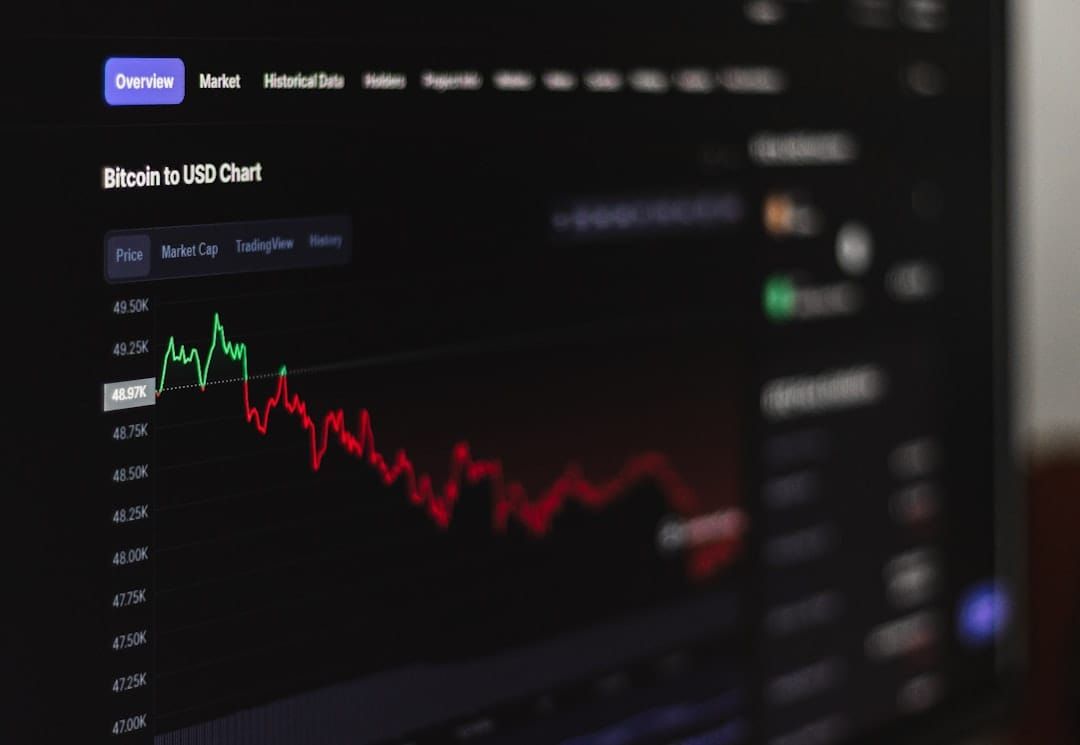
Most traders use DexScreener to spot trending tokens but miss the crucial next step: analyzing their own wallet composition before executing swaps. In 2026, sophisticated traders combine real-time market data with wallet-aware routing to achieve 15-30% better execution prices compared to blind following of DexScreener alerts.
The integration of AI-powered tools like swapcrypto.ai with traditional screeners represents a fundamental shift in how advanced users approach DEX trading. Rather than treating each swap as an isolated transaction, wallet analysis enables portfolio-aware decision making that considers concentration risk, momentum alignment, and idle capital optimization.
Key Takeaways:Wallet analysis crypto tools now integrate with DexScreener data to provide portfolio-aware swap recommendations with 71% confidence ratings based on current allocations and momentum patterns.Cross-chain arbitrage opportunities increase by 40% when combining DexScreener alerts with wallet exposure analysis across multiple chains, according to 2026 trading data.Hardware wallet security in 2026 features Secure Element chips with EAL6+ certification and trusted displays to prevent transaction spoofing during complex multi-chain swaps.Effective slippage analysis requires examining true liquidity depth at specific trade sizes ($10K, $100K) rather than nominal pool values shown on basic screeners.OCC digital asset trust bank charters granted to Circle, BitGo, and Fidelity in December 2025 created new institutional-grade custody infrastructure for large-scale DEX operations.
Table of Contents
- Wallet Analysis Fundamentals for DEX Trading
- DexScreener Integration Patterns
- Cryptographic Security Architecture
- AMM Mechanics and Slippage Analysis
- Cross-Chain Routing Optimization
- On-Chain Screening Algorithms
- Practical Implementation Framework
- Frequently Asked Questions
Wallet Analysis Fundamentals for DEX Trading
Wallet analysis crypto tools examine your current holdings, exposure distribution, and transaction history to inform swap decisions. Unlike traditional portfolio trackers that simply display balances, these systems perform active risk assessment and opportunity identification.
Core Analysis Components:
- Concentration Risk Mapping: Identifies overexposure to specific chains, protocols, or token categories
- Momentum Correlation: Analyzes whether new positions align with existing portfolio momentum
- Idle Capital Detection: Flags stablecoin holdings and underperforming assets suitable for reallocation
- Liquidity Efficiency: Calculates optimal position sizes based on available DEX liquidity
The swapcrypto.ai platform exemplifies this approach by analyzing wallet holdings before suggesting swaps. When a user holds 60% USDC and 40% ETH, and DexScreener shows ASTER trending on BNB Chain, the system evaluates: chain exposure (user has zero BNB positions), correlation with existing holdings (ASTER momentum aligns with current ETH performance), and capital efficiency (USDC sitting idle while opportunities emerge).
Technical Implementation: Modern wallet analysis relies on multi-chain data aggregation. Tools like Dune Analytics provide SQL-queryable blockchain data, while APIs from Moralis, Alchemy, and QuickNode enable real-time balance monitoring across Ethereum, Polygon, Arbitrum, BNB Chain, and Solana simultaneously.
The key insight: treating your wallet as a dynamic system rather than a static collection of assets. Each new swap should optimize the overall portfolio risk-return profile, not just capture immediate trading opportunities.
DexScreener Integration Patterns
DexScreener provides real-time price data, volume analysis, and social sentiment indicators across 50+ blockchains. Advanced users layer additional filtering and wallet-aware logic on top of these base signals.
Multi-Chain Screening Strategy:
- Primary Filter (DexScreener): 1-hour price change +20%, minimum $50K liquidity, 200+ transactions
- Secondary Filter (Wallet Analysis): Chain exposure check, correlation analysis with existing positions
- Execution Filter (Route Optimization): Gas cost analysis, slippage simulation, MEV protection assessment
BogSwap and DexCheck represent alternative screener architectures gaining traction in 2026. BogSwap's event analyzer identifies recurring patterns (e.g., tokens that pump 48 hours after specific on-chain events), while DexCheck's whale tracking focuses on copying profitable trader strategies based on verified P&L metrics.
API Integration Architecture: Professional traders use webhook systems to receive DexScreener alerts, then automatically trigger wallet analysis scripts. Python libraries like Web3.py enable direct interaction with smart contracts to verify pool states, while GraphQL queries to The Graph protocol provide historical trading patterns.
Example webhook payload structure:
{
  "token_address": "0x...",
  "chain": "ethereum",
  "price_change_1h": 0.23,
  "volume_usd": 125000,
  "liquidity_usd": 450000,
  "tx_count_1h": 340
}
The integration layer then queries your wallet via ethers.js or similar libraries to determine position sizing, risk tolerance, and execution feasibility before presenting trade recommendations.
Cryptographic Security Architecture
Hardware wallet security in 2026 represents a significant evolution from basic private key storage. Modern devices implement defense-in-depth strategies against both physical and remote attack vectors.
Secure Element Implementation: The Ledger Flex uses Common Criteria EAL6+ certified chips with hardware-enforced isolation between secure and non-secure operations. The Secure Element (SE) stores private keys in tamper-resistant memory that physically destroys key material if unauthorized access is attempted.
Trusted Display Technology: The 2.84″ E Ink screen provides "what you see is what you sign" protection. Unlike smartphone apps where malware can modify display content, the hardware-controlled screen shows transaction details that cannot be spoofed by compromised software.
Multi-Party Computation (MPC) Wallets: Seedless wallet architectures distribute private key shares across multiple parties or devices. While eliminating seed phrase exposure, they introduce dependency on MPC provider infrastructure and potential collusion risks among key share holders.
Software Wallet Security Models:
| Wallet Type | Key Storage | Attack Surface | Best Use Case |
|---|---|---|---|
| MetaMask | Browser extension | Browser compromise, phishing | Daily DeFi interactions |
| Phantom | Local device storage | Device malware, seed exposure | Solana ecosystem trading |
| Rabby | Local with simulation | Transaction simulation bypass | EVM multi-chain operations |
The critical consideration for DEX trading: transaction simulation capabilities. Rabby's human-readable transaction previews help identify malicious smart contracts that could drain wallet contents during seemingly legitimate swaps. MetaMask's 2026 security features include similar simulation for Bitcoin, Solana, and TRON transactions beyond just EVM chains.
AMM Mechanics and Slippage Analysis
Automated Market Makers operate on mathematical formulas that determine token prices based on liquidity pool ratios. Understanding these mechanisms enables precise slippage prediction and optimal trade sizing.
Constant Product Formula: The fundamental AMM equation `x * y = k` governs price discovery in Uniswap-style pools. When you swap token A for token B:
- x = current quantity of token A in pool
- y = current quantity of token B in pool
- k = constant product that must remain unchanged after swap
Your trade size directly affects the new x/y ratio, which determines the effective exchange rate. Larger trades cause more dramatic ratio shifts, resulting in higher slippage.
Slippage Calculation: For a trade swapping amount Δx of token A:
New token A quantity: x' = x + Δx
New token B quantity: y' = k / x'
Tokens received: Δy = y - y'
Effective price: Δx / Δy
The difference between this effective price and the current pool ratio represents your slippage cost.
Liquidity Depth Analysis: DexScreener shows nominal Total Value Locked (TVL), but effective liquidity varies significantly based on trade size. A $1M pool might provide excellent execution for $1K trades but cause 10%+ slippage for $100K orders.
Professional traders use tools like 1inch's aggregation algorithms to split large trades across multiple pools, minimizing total slippage. The platform queries dozens of DEXs simultaneously, calculating optimal routing paths that balance execution quality with gas costs.
MEV Protection Mechanisms: Maximal Extractable Value (MEV) occurs when miners or validators reorder transactions to capture arbitrage opportunities at your expense. Solutions include:
- Private Mempools: Submit transactions through Flashbots Protect or similar services to avoid public mempool exposure
- Commit-Reveal Schemes: Two-phase transactions that hide trade details until execution
- Batch Auctions: CoW Protocol aggregates trades to eliminate frontrunning opportunities
Cross-chain bridges like Teleswap implement additional protections by using light client verification rather than trusted intermediaries, reducing the attack surface for MEV extraction during Bitcoin-to-EVM swaps.
Cross-Chain Routing Optimization
Multi-chain trading requires optimizing across gas fees, bridge security, and liquidity availability. The 2026 landscape includes both wrapped asset bridges and native cross-chain protocols with distinct risk-return profiles.
Bridge Architecture Comparison:
| Bridge Type | Security Model | Example | Trust Assumptions |
|---|---|---|---|
| Custodial | Multi-sig committee | WBTC | Trust bridge operators |
| Threshold Signature | Cryptographic threshold | tBTC | Trust majority of signers |
| Light Client | SPV verification | TeleBTC | Trust source chain consensus |
| Liquidity Network | Native asset pools | THORChain | Trust network economics |
Teleswap's light client approach verifies Bitcoin transactions directly on destination chains using SPV (Simplified Payment Verification) proofs. This eliminates custodial risk while maintaining trustless execution — critical for large-value cross-chain operations where bridge hacks could result in total loss.
Gas Cost Optimization: Layer 2 solutions dramatically reduce transaction costs for complex multi-hop swaps. Based on current fee data:
- Ethereum Mainnet: $15-50 per swap (depending on network congestion)
- Arbitrum: $0.50-2 per swap
- Polygon: $0.10-0.50 per swap
- Solana: ~$0.001 per swap
For trades under $1,000, Ethereum mainnet gas fees often exceed 5-15% of transaction value, making Layer 2 or alternative L1 chains essential for cost-effective execution.
Liquidity Fragmentation Solutions: Aggregators like Li.fi and Rango Exchange query multiple bridges and DEXs to find optimal routing paths. Their algorithms consider:
- Total execution cost (gas + fees + slippage)
- Execution time (bridge confirmation delays)
- Security score (bridge risk assessment)
- Success probability (bridge uptime and liquidity availability)
Advanced users script these API calls to automatically execute wallet analysis recommendations across the most efficient available routes.
On-Chain Screening Algorithms
Sophisticated screening requires analyzing blockchain transaction patterns beyond basic price movements. Successful algorithms identify genuine trading activity versus artificial pump schemes.
Transaction Pattern Analysis:
- Unique Address Count: Healthy tokens show diverse holder distributions; pump schemes concentrate in few addresses
- Transaction Size Distribution: Organic activity includes varied trade sizes; bot activity shows repeated identical amounts
- Temporal Clustering: Natural trading spreads across time; coordinated pumps show suspicious clustering
- Liquidity Provider Analysis: Stable LP positions indicate confidence; rapid LP withdrawal suggests upcoming dumps
Example algorithm for Solana memecoin screening:
def screen_token(token_address):
    # Get 1-hour metrics
    price_change = get_price_change(token_address, '1h')
    liquidity = get_pool_liquidity(token_address)
    tx_count = get_transaction_count(token_address, '1h')
    token_age = get_token_age(token_address)

    # Apply filters
    if price_change < 0.20:  # +20% minimum
        return False
    if liquidity < 50000:  # $50K minimum liquidity
        return False
    if tx_count < 200:  # 200+ transactions
        return False
    if token_age < 24 or token_age > 168:  # 1-7 days old
        return False

    return True
This filtering typically yields 5-20 candidates per day on Solana, dramatically reducing noise compared to monitoring all new token launches.
Whale Activity Detection: Large holder movements often precede significant price action. DexTools and similar platforms track wallet addresses with >$100K positions, alerting when they execute large swaps or transfers.
Key metrics include:
- Holder Concentration: Top 10 addresses controlling >50% indicates manipulation risk
- Fresh Wallet Activity: New addresses accumulating large positions may signal insider activity
- Exchange Flows: Large transfers to centralized exchanges often precede selling pressure
Professional trading operations combine these signals with traditional technical analysis. A token showing +50% price action with healthy on-chain fundamentals (diverse holders, sustained liquidity, organic transaction patterns) presents higher conviction opportunities than pure momentum plays.
Practical Implementation Framework
Implementing wallet analysis crypto strategies requires integrating multiple data sources and execution layers. Here's a technical framework for advanced users:
Data Infrastructure Stack:
- Blockchain Data: Alchemy, QuickNode, or Moralis APIs for real-time blockchain queries
- Market Data: DexScreener API, CoinGecko Pro, or DefiLlama for price and volume data
- Portfolio Tracking: Custom wallet monitoring via ethers.js, web3.py, or similar libraries
- Execution Layer: 1inch API, Jupiter API (Solana), or direct DEX smart contract interactions
Sample Integration Code:
import requests
from web3 import Web3

class WalletAnalyzer:
    def __init__(self, wallet_address, rpc_url):
        self.wallet = wallet_address
        self.w3 = Web3(Web3.HTTPProvider(rpc_url))

    def get_portfolio_metrics(self):
        # Query current balances
        balances = self.get_token_balances()

        # Calculate concentration risk
        total_value = sum(balances.values())
        concentration = max(balances.values()) / total_value

        # Identify idle stablecoins
        stablecoin_ratio = self.get_stablecoin_ratio(balances)

        return {
            'concentration_risk': concentration,
            'stablecoin_ratio': stablecoin_ratio,
            'total_value_usd': total_value
        }

    def evaluate_swap_opportunity(self, dex_signal):
        portfolio = self.get_portfolio_metrics()

        # Risk assessment
        if portfolio['concentration_risk'] > 0.7:
            return {'recommendation': 'PASS', 'reason': 'High concentration risk'}

        # Capital efficiency check
        if portfolio['stablecoin_ratio'] > 0.3:
            return {'recommendation': 'CONSIDER', 'position_size': 'Medium'}

        return {'recommendation': 'EVALUATE', 'position_size': 'Small'}
Security Considerations: Never store private keys in analysis scripts. Use read-only API calls for portfolio monitoring and hardware wallet signing for execution. Implement rate limiting to avoid API throttling and use secure RPC endpoints to prevent transaction interception.
Backtesting Framework: Historical blockchain data enables strategy validation. Tools like Dune Analytics provide SQL-queryable datasets for analyzing past performance of screening criteria and position sizing rules.
The regulatory landscape in 2026 also affects implementation. With OCC digital asset bank charters granted to Circle, BitGo, and Fidelity Digital Assets in December 2025, institutional-grade custody solutions now support complex DeFi strategies while maintaining regulatory compliance.
For Bitcoin integration, Teleswap's trustless bridge enables BTC holders to participate in DeFi yield opportunities without custodial risk. Unlike WBTC's centralized custody model, Teleswap uses SPV light client proofs to verify Bitcoin transactions on destination chains, maintaining Bitcoin's security model throughout the cross-chain process.
Frequently Asked Questions
What is wallet analysis crypto and how does it improve trading?
Wallet analysis crypto examines your current holdings, risk exposure, and capital allocation to inform optimal trading decisions. Instead of executing swaps based purely on market signals, wallet analysis considers portfolio concentration risk, momentum correlation with existing positions, and idle capital efficiency. Advanced platforms like swapcrypto.ai provide confidence ratings (e.g., "71% confidence") by analyzing whether new positions align with your current allocation strategy and risk tolerance.
How do I integrate DexScreener data with wallet analysis tools?
Integration requires combining DexScreener's API data with blockchain queries of your wallet balances across multiple chains. Professional traders use webhook systems to receive DexScreener alerts (price changes, volume spikes, new listings), then automatically trigger portfolio analysis scripts using Web3 libraries like ethers.js or web3.py. The analysis layer evaluates whether the trading opportunity fits your current risk profile before recommending position sizes and execution strategies.
What are the key differences between hardware and software wallet security for DEX trading?
Hardware wallets provide Secure Element chip protection and trusted displays to prevent key extraction and transaction spoofing, while software wallets offer convenience but greater attack surface exposure. In 2026, devices like the Ledger Flex use EAL6+ certified chips with tamper-resistant memory and E Ink screens that cannot be compromised by malware. Software wallets like MetaMask and Rabby compensate with transaction simulation features that preview smart contract interactions before signing.
How do AMM slippage calculations work and why do they matter for large trades?
AMM slippage results from the constant product formula (x * y = k) where larger trades cause more dramatic pool ratio changes and less favorable exchange rates. When you swap amount Δx for token A, the effective price becomes Δx / (y - k/(x + Δx)), which differs from the current pool ratio for substantial trades. Professional traders use aggregators like 1inch to split large orders across multiple pools, minimizing total slippage impact.
What are the security trade-offs between different cross-chain bridge architectures?
Custodial bridges like WBTC require trusting multi-sig operators, threshold signature schemes like tBTC trust cryptographic majorities, while light client bridges like TeleBTC verify source chain transactions directly. Custodial models concentrate risk in bridge operators who could freeze or steal funds. Threshold signatures distribute trust among multiple parties but remain vulnerable to coordinated attacks. Light client verification inherits the source blockchain's security model, providing trustless operation without additional trust assumptions.
How can I identify fake trading volume and pump schemes using on-chain analysis?
Genuine trading activity shows diverse holder distributions, varied transaction sizes, and distributed temporal patterns, while pump schemes concentrate in few addresses with repetitive bot activity. Key indicators include: unique address count (healthy tokens have diverse holders), transaction size distribution (organic activity varies, bots use identical amounts), and liquidity provider stability (rapid LP withdrawals often precede dumps). Effective screening filters require minimum thresholds like 200+ transactions per hour and $50K+ liquidity depth.
What programming tools and APIs are essential for implementing wallet analysis strategies?
Essential tools include blockchain data APIs (Alchemy, Moralis), market data feeds (DexScreener, CoinGecko Pro), portfolio tracking libraries (ethers.js, web3.py), and execution aggregators (1inch, Jupiter for Solana). The technical stack typically involves Python or JavaScript scripts that query wallet balances, calculate portfolio metrics like concentration risk and stablecoin ratios, then integrate with DEX APIs for optimal routing and execution. Security requires read-only API access for analysis and hardware wallet signing for transactions.