BTC WBTC Swap: Avoid Wrapped Token Risks 2026

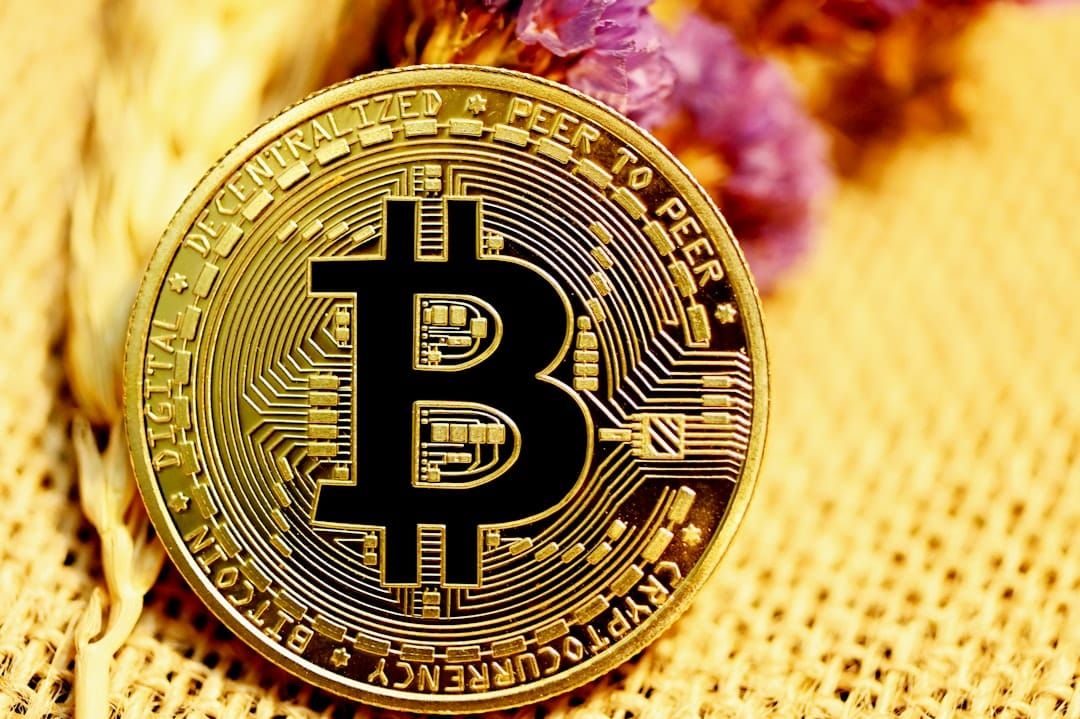
You want to use Bitcoin in DeFi — earn yield, provide liquidity, or access lending markets — but your BTC is stuck on the Bitcoin network. The most popular solution is a BTC WBTC swap, converting your native Bitcoin into Wrapped Bitcoin (WBTC) so it works on Ethereum. It sounds simple. The risk hiding underneath it is anything but.
As of July 2026, WBTC has a market cap of $7.52 billion — yet every single token in that pool depends on a small group of approved custodians holding the underlying BTC. When that trust breaks, as it did with soBTC during the FTX collapse in 2022, holders get nothing. This guide explains exactly what you're signing up for, what the real alternatives are, and how to move BTC into DeFi without betting your stack on someone else's integrity.
Key Takeaways:WBTC is an ERC-20 token backed 1:1 by real BTC, but minting and burning is controlled exclusively by DAO-approved custodians — meaning you must trust those institutions with your Bitcoin.The FTX-linked soBTC collapse in 2022 became completely irredeemable overnight, proving that single-entity custody risk is real and catastrophic.TeleSwap has processed over $426 million in bridging volume across 435,654 transactions using SPV light-client proofs — no custodian holds your BTC, security is verified on-chain.A trustless BTC WBTC swap alternative settles in approximately 10 minutes and covers destination-chain gas fees automatically via Teleporters.Understanding the difference between custodial and non-custodial wrapped BTC is the single most important decision you'll make before moving Bitcoin into DeFi.
Table of Contents
- What Is WBTC and Why Do People Swap BTC for It?
- How a BTC WBTC Swap Actually Works
- 4 Wrapped Bitcoin Risks You Need to Know in 2026
- BTC Bridge Comparison: WBTC vs. tBTC vs. TeleBTC
- What Is a Trustless WBTC Swap Alternative?
- How to Move BTC Into DeFi Using TeleSwap
- Frequently Asked Questions
What Is WBTC and Why Do People Swap BTC for It?
Think of WBTC like a coat-check ticket. You hand your coat (Bitcoin) to the attendant (a custodian), and in return you get a ticket (WBTC) that represents it. You can trade that ticket, use it as collateral, or earn yield on it inside Ethereum's DeFi ecosystem. When you want your coat back, you hand in the ticket and the attendant gives you the coat.
The system works — until the coat-check booth burns down, or the attendant runs off.
WBTC is an ERC-20 token supposed to always be redeemable for exactly 1 Bitcoin. It was launched in 2019 and has grown to a circulating supply of about 116,130 WBTC tokens as of July 2026, according to MetaMask's pricing data. That's over $7.5 billion worth of Bitcoin locked behind a trust-based system.
People want WBTC because Bitcoin itself doesn't run smart contracts. You can't natively deposit BTC into Aave, trade it on Uniswap, or use it to mint stablecoins — Bitcoin's blockchain wasn't built for that. WBTC bridges the gap, letting Bitcoin's value participate in Ethereum's vibrant DeFi ecosystem including lending on Compound, providing liquidity on Curve, and borrowing against your holdings on MakerDAO.
The appeal is real. The risk is just as real, and far too few beginner guides explain it clearly.
How a BTC WBTC Swap Actually Works
The standard WBTC minting process involves three parties: the user, a merchant (an approved intermediary), and a custodian (an institution that actually holds the BTC). Here's what happens step by step:
- You request WBTC. You contact a DAO-approved merchant — a list that includes institutions like Amber Group, BitGo, Wintermute, CoinList, and Cobo.
- You send BTC to the custodian. After identity verification (KYC), you transfer Bitcoin to a custodian wallet address.
- WBTC is minted. The custodian confirms receipt and triggers the minting of an equivalent amount of WBTC on Ethereum, sent to your Ethereum wallet.
- To redeem, you reverse it. You send WBTC back to the merchant, who initiates a burn transaction. The custodian then releases your BTC.
For most everyday users, the "swap" happens on a decentralized exchange (DEX) like Uniswap, where you trade ETH or stablecoins for WBTC in an existing liquidity pool — without going through the minting process yourself. But even then, the WBTC in that pool was minted by the same custodial process. The trust assumption doesn't disappear; you just don't see it.
Governance over who can mint and burn WBTC sits with the WBTC DAO, a 16-member decentralized autonomous organization including MakerDAO, Gnosis, and other ecosystem participants. The DAO can add or remove custodians and merchants, approve smart contract changes, and effectively control the entire supply of WBTC.
4 Wrapped Bitcoin Risks You Need to Know in 2026
None of what follows is theoretical. Each risk category has a real-world precedent.
1. Custodial Failure Risk
The most fundamental wrapped Bitcoin risk is that your BTC isn't in your custody — it's in someone else's. If that custodian is hacked, goes bankrupt, or is seized by regulators, your WBTC could become worthless overnight.
The clearest example: soBTC, a Solana-based wrapped Bitcoin tied to FTX infrastructure, became completely irredeemable when FTX collapsed in November 2022. Holders couldn't get their Bitcoin back. There was no insurance, no fallback, no recourse. The ticket was real; the coat was gone.
2. Smart Contract Risk
WBTC exists as code on the Ethereum blockchain. That code can have bugs. Exploits targeting token contracts have drained hundreds of millions of dollars from DeFi protocols over the years. Even audited contracts can contain undiscovered vulnerabilities, and a bug in the WBTC contract itself — or in any protocol you deposit WBTC into — could result in permanent loss of funds.
3. Regulatory and Governance Risk
The WBTC DAO can change who controls the minting and burning of WBTC. In 2024, BitGo (one of WBTC's primary custodians) announced a partnership with BiT Global, a company linked to Justin Sun, to jointly custody WBTC's Bitcoin reserves. The announcement sparked significant community concern about the direction of WBTC governance and whether the decentralization claims held up under scrutiny. Separately, the EU's MiCA regulation transitional period ended on July 1, 2026, imposing new licensing requirements on crypto service providers — adding regulatory uncertainty for WBTC custodians operating in Europe.
4. Liquidation Cascade Risk
When you deposit WBTC into a lending protocol as collateral, you take on a new layer of risk. In June 2026, when Bitcoin briefly fell below $58,000, more than $212 million in long positions were liquidated in a single day. Borrowers who used WBTC as collateral had their positions forcibly closed, crystallizing losses they wouldn't have faced if they'd simply held BTC. The DeFi mechanism that enables yield is the same one that can rapidly wipe out your position in a downturn.
BTC Bridge Comparison: WBTC vs. tBTC vs. TeleBTC
Not all wrapped Bitcoin is created equal. Here's how the main options compare on the criteria that matter most to someone moving BTC into DeFi for the first time.
| Feature | WBTC | tBTC | TeleBTC (TeleSwap) |
|---|---|---|---|
| Custody Model | Centralized custodians (BitGo, BiT Global) | Decentralized signers (threshold signatures) | Collateral-backed Lockers, no single custodian |
| Security Mechanism | DAO governance + trusted institutions | Threshold signature (multi-party) | SPV light-client proofs on Bitcoin |
| KYC Required? | Yes (for minting/burning) | No | No |
| Settlement Time | Minutes to days (minting) / seconds (DEX) | ~3 hours (minting) | ~10 minutes |
| Gas Fees | User pays ETH gas | User pays ETH gas | Covered by Teleporter (pay in BTC assets) |
| Chains Supported | Ethereum + select others | Ethereum | 13 networks (EVM chains, TON, Solana) |
| Trust Assumption | High — trust custodians | Medium — trust signers' availability | Low — Bitcoin-level SPV verification |
| Historical Track Record | Since 2019, no direct hack but governance disputes | Limited liquidity | $426M+ in verified bridge volume |
The key insight from this btc bridge comparison: the security model is the thing. WBTC's 1:1 backing is real — but the guarantee is only as strong as the custodian holding the BTC. tBTC uses threshold signatures to distribute trust across multiple signers, which is better, but introduces coordination complexity and historically limited liquidity. TeleBTC uses SPV (Simplified Payment Verification) proofs — cryptographic evidence derived directly from the Bitcoin blockchain — which means no counterparty can fabricate or block a valid transaction.
What Is a Trustless WBTC Swap Alternative?
A "trustless" system doesn't mean you trust nobody — it means the protocol forces everyone to behave honestly through math and economic incentives, rather than through legal agreements or reputation.
Here's the analogy: a traditional bank vault is "trusted" because you trust the bank. A combination lock is "trustless" because the mechanism itself enforces access — no trust in the bank needed. SPV light-client proofs work like the combination lock for Bitcoin transactions.
When TeleSwap processes a BTC wrap request, it doesn't ask a custodian "did you receive the Bitcoin?" It reads the Bitcoin blockchain directly using SPV proofs — the same verification method that full Bitcoin nodes use — and verifies the transaction happened before minting anything. According to the TeleSwap documentation, a transaction needs four confirmations on the Bitcoin chain before a Teleporter submits it to the TeleSwap contract for processing. Only after cryptographic verification does the contract mint wrapped BTC.
Critically, the Lockers in TeleSwap's system — the entities that hold BTC during the bridging process — must post collateral that exceeds the value of the Bitcoin they hold. If a Locker misbehaves or fails to release BTC, their collateral is slashed. The economic penalty makes dishonesty more expensive than honesty, which is exactly how trustless systems are designed to work.
This is the key distinction TeleBTC holds over traditional WBTC: no single company or institution can run off with your Bitcoin, because the protocol's rules are enforced by code and collateral, not by reputation or legal liability.
How to Move BTC Into DeFi Using TeleSwap
If you've decided that custodial risk is something you'd rather avoid — or if you want to compare the experience firsthand — here's exactly how a BTC to wrapped token swap works through TeleSwap's protocol.
- Go to teleswap.xyz. No account creation, no KYC. Connect your Ethereum (or other EVM) wallet using MetaMask, Trust Wallet, or any compatible wallet.
- Select your swap pair. Choose BTC as your input and your desired output token — TeleBTC (1:1 wrapped BTC), an ERC-20, or a token on another supported chain. TeleSwap supports 13 networks as of August 2026, per TeleSwap network stats.
- Get a quote. TeleSwap's SDK returns a quote in under a minute. You'll see the exchange rate, fee breakdown, and expected output amount.
- Send Bitcoin. TeleSwap generates a Bitcoin address (a Locker address) for you to send BTC to. Include your recipient address and other required information in the transaction — the protocol reads this from the Bitcoin chain directly.
- Wait for 4 Bitcoin confirmations. This takes roughly 40 minutes on average. Once confirmed, a Teleporter node automatically submits your transaction to the TeleSwap contract for verification.
- Receive your tokens. After verification, your wrapped BTC (TeleBTC) or your target token is sent to your recipient address. A Teleporter covers the destination-chain gas on your behalf — you don't need to hold ETH or any other gas token to receive funds.
To go back from TeleBTC to native BTC, the process reverses: you send an unwrap request to the TeleSwap contract, it burns your TeleBTC, and the assigned Locker sends native BTC to your Bitcoin address — then submits proof of that transaction on-chain. Every step is verifiable.
TeleSwap has now processed $426,136,660 in bridging volume across 435,654 transactions, according to TeleSwap network stats. In the last 30 days alone, that's $26.1 million in volume, averaging roughly $870,000 per day. For a trustless protocol that launched without the institutional backing of WBTC, that's meaningful real-world validation.
TeleSwap is also available inside major DeFi aggregators including Rango, Rubic, and DZap, and accessible through MetaMask and Trust Wallet via the Rango integration — so if you're already using those tools, you may be closer to a trustless BTC swap than you realized.
Frequently Asked Questions
What is a BTC WBTC swap?
A BTC WBTC swap is the process of converting native Bitcoin into Wrapped Bitcoin (WBTC), an ERC-20 token on Ethereum that represents BTC at a 1:1 ratio. It allows Bitcoin holders to participate in Ethereum-based DeFi protocols like Aave, Compound, and Uniswap without selling their Bitcoin exposure. The swap typically happens through a custodian or on a decentralized exchange that has existing WBTC liquidity.
Is WBTC safe to hold?
WBTC carries real counterparty risk because your underlying Bitcoin is held by approved custodians, not by you. While WBTC has operated since 2019 without a direct hack, governance disputes — including concerns around the 2024 custodian arrangement with BiT Global — and the broader precedent of soBTC becoming worthless after FTX's collapse illustrate that custodial models have genuine failure modes. Whether it's "safe" depends heavily on your risk tolerance and how long you intend to hold it.
What are the biggest wrapped bitcoin risks in 2026?
The four main wrapped Bitcoin risks are custodial failure, smart contract bugs, governance/regulatory changes, and liquidation cascades when using wrapped BTC as collateral. Custodial risk is the most fundamental: if the entity holding your BTC fails or is compromised, your WBTC may become unredeemable. Smart contract vulnerabilities can drain protocol funds without warning. Regulatory shifts (like MiCA in Europe) can affect which custodians are allowed to operate. And using WBTC as borrowing collateral introduces liquidation risk during price drops — over $212 million was liquidated in a single day in June 2026.
How is TeleBTC different from WBTC?
TeleBTC uses SPV light-client proofs to verify Bitcoin transactions directly on-chain, rather than relying on a trusted custodian to confirm receipt of BTC. Lockers (the entities that hold BTC during bridging) must post collateral exceeding the value of Bitcoin they hold, and are slashed if they misbehave. This eliminates the single point of failure inherent in custodial models like WBTC, where a small group of approved institutions controls minting and burning. TeleBTC is designed so that trust is enforced by cryptography and economic incentives, not by institutional reputation.
How long does a trustless BTC WBTC swap alternative take?
A trustless BTC bridge swap through TeleSwap settles in approximately 10 minutes after Bitcoin transaction confirmation. The protocol requires 4 Bitcoin confirmations (typically around 40 minutes) before processing your request, after which the wrapped token is minted and sent to your wallet. The total end-to-end time is generally under an hour, which is comparable to or faster than going through WBTC's full minting process via an approved custodian.
Do I need ETH to pay gas fees when using TeleSwap?
No — TeleSwap's Teleporter system covers destination-chain gas fees on your behalf, so you can receive tokens on Ethereum or other EVM chains without holding ETH or any other gas token. Fees are paid in Bitcoin assets, keeping the process simple for Bitcoin-native users who may not have native tokens on the destination chain yet.
Can I swap BTC to tokens other than WBTC using TeleSwap?
Yes — TeleSwap supports BTC swaps into any token on its 13 supported networks in a single step, including ERC-20s on Ethereum, Jettons on TON, and SPL tokens on Solana. Rather than first wrapping BTC and then swapping manually on a DEX, TeleSwap routes the entire process through its protocol in one transaction: your BTC arrives, gets verified via SPV proof, and is automatically exchanged for your target token through an integrated AMM DEX. If the exchange rate falls below your minimum, TeleBTC is sent to your wallet instead.
The Bottom Line: Know What You're Trusting
A BTC WBTC swap is one of the most common ways to bring Bitcoin into DeFi — and one of the most misunderstood from a risk perspective. WBTC's custodial model has worked for years, but "hasn't failed yet" is not the same as "can't fail." The soBTC collapse proved that wrapped token risk is real, not theoretical.
The good news is that the alternative exists and is battle-tested. TeleBTC and TeleSwap's SPV-verified, collateral-backed bridging model gives you access to the same DeFi ecosystem without handing your Bitcoin's fate to a custodian. Over $426 million in verified volume across 435,654 transactions is evidence that trustless Bitcoin bridging works at scale — not just in theory.
If you're ready to move BTC into DeFi without the custodial risk, the next step is straightforward.